
By Dayib Sh. Ahmed
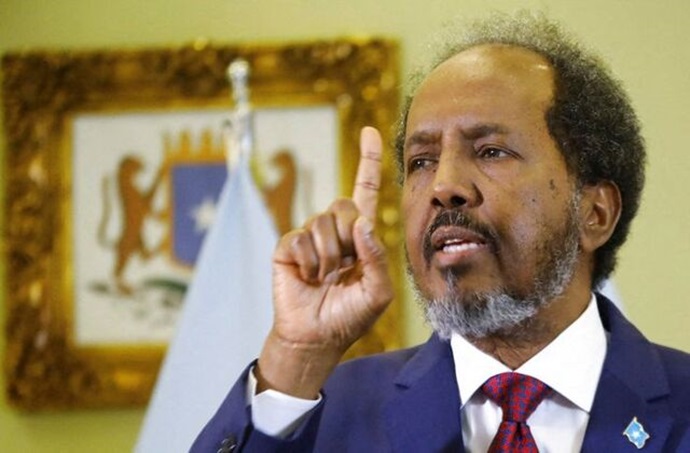
The period following the inauguration of President Hassan Sheikh Mohamoud on 15 May 2022 marks a critical and perilous chapter in the political and constitutional history of Somalia. This phase, culminating in his assent to the so-called Four Chapters Constitution (FCC) on 31 March 2024, has not been one of democratic consolidation but of systematic dismantling. It represents an unprecedented subversion of Somalia’s rule of law, executed not through force of arms but through the manipulation of legal processes.
To fully comprehend the gravity of the current crisis, it is imperative to examine these events with clarity and precision, viewing them through the sobering lens of Somalia’s past. The nation stands today at a crossroads eerily reminiscent of 1969, though this time the assault on constitutional order has taken on a more sophisticated and insidious character. Whereas the coup of 1969 was unmistakably violent and overt, the ongoing political maneuvers are cloaked in legality and framed as reform, but in reality they constitute a carefully orchestrated silent coup that undermines the very foundation of Somali statehood.
To understand the depth of today’s crisis, one must look back to 1969, when Major General Mohamed Siad Barre and the military staged a swift and decisive coup that upended Somalia’s fledgling democracy. On 21 October of that year, tanks rolled into Mogadishu, the constitutional government was abruptly toppled, and the promise of democratic pluralism that had been painstakingly built since independence was extinguished overnight. The aftermath was stark: the 1960 Constitution, which had served as the foundational document of the Somali state, was suspended; martial law replaced civilian authority; and democratic institutions such as the National Assembly were dissolved, effectively eradicating checks and balances. The power vacuum was filled by the Somali Revolutionary Socialist Party, which concentrated authority in the hands of one ruler and entrenched one-party rule. What followed was not simply a change in leadership but the erosion of Somalia’s institutional fabric. Decades of authoritarianism, suppression, and centralization produced internal strife, deepened political fractures, and ultimately paved the way for the catastrophic collapse of the state in 1991. This legacy serves as a cautionary tale, a reminder of how abruptly a constitutional order can be shattered and how the costs of authoritarian shortcuts can linger for generations.
However, unlike the overt violence of that era, the contemporary coup is distinguished by its subtlety and legalistic disguise. Since 2022, Somalia has been witnessing a more insidious form of subversion, one that weaponizes legal manipulation rather than brute force. President Hassan Sheikh Mohamoud’s assent to the FCC represents a deliberate departure from the 2012 Federal Provisional Constitution, which remains the supreme law of the land. The FCC was introduced and ratified through a process that lacked the consultation, inclusivity, and consensus required by the very constitution it seeks to replace. Rather than openly suspending the existing order, as Siad Barre did in 1969, the FCC establishes a parallel constitutional reality, creating dual frameworks that contradict one another and plunge Somalia into legal uncertainty. This duality is not a recognized model of constitutional development—it is neither a full replacement, nor an amendment, nor an interim charter—but an extralegal construction designed to entrench executive power while retaining the illusion of legitimacy. The outcome is profound institutional confusion: federal institutions such as the Parliament and the Council of Ministers are left uncertain as to whether their authority stems from the 2012 framework or from the FCC imposed by the executive. This confusion paralyzes decision-making, fosters a climate of ambiguity, and risks replicating the same dysfunction that plagued Somalia after 1969, though this time under the deceptive cloak of legality.

The consequences of this parallelism are already visible in the erosion of federalism and the growing crisis of legitimacy. By pursuing a top-down vision without securing the genuine consent of Federal Member States, the FCC threatens Somalia’s fragile federal balance and centralizes authority in Mogadishu, echoing the authoritarian tendencies of the Barre regime. Regional leaders who have chosen to align themselves with this process have undermined both their own political standing and the broader federal compact, trading long-term constitutional stability for short-term gains. Equally concerning is the self-delegitimization of the presidency itself. Hassan Sheikh Mohamoud’s authority is rooted in the 2012 Constitution, yet by openly violating its provisions, he has severed the very foundation of his mandate.
The Federal Parliament, through acquiescence or active participation, has compromised its role as the guardian of constitutional order, while the Council of Ministers functions under a framework that lacks legitimate foundation. Since April 2024, these officials have effectively transitioned from violating constitutional norms to illegally occupying office, wielding state powers without a lawful mandate and plunging the nation into a constitutional limbo. This state of illegality produces far-reaching consequences: it weakens governance by making policies and agreements vulnerable to challenge, removes effective checks on executive authority, erodes public trust, and jeopardizes Somalia’s standing with international partners who expect a commitment to a legitimate and stable constitutional order.
In light of this crisis, the path forward must center on reaffirming constitutional supremacy and restoring legitimacy. The first step is an unequivocal rejection of the FCC as unlawful and unconstitutional; it cannot be accepted as a legitimate basis for governance or political compromise. Somalia must restore the primacy of the 2012 Federal Provisional Constitution as the sole legal framework governing public life, ensuring that all state actions are measured against its provisions. Equally important is the pursuit of accountability and reconciliation: mechanisms of transitional justice and political dialogue should be developed to hold those responsible for constitutional subversion accountable, while also fostering the healing of national wounds. Moreover, a renewed commitment is needed to an inclusive, transparent, and federally-owned constitutional review process—one that respects Somalia’s diversity, secures genuine federal consensus, and produces a permanent constitution that reflects the aspirations of all its people. Only by choosing this path can Somalia hope to avoid repeating the catastrophic mistakes of its past.
The period from May 2022 to the present represents not merely a political struggle but a historic turning point: a silent coup cloaked in legality, more sophisticated than the overt violence of 1969, but equally destructive in its long-term consequences. Setting the record straight on these developments is not an academic exercise; it is a vital act of preservation. Somalia must choose between succumbing to manipulation and illegality, thereby risking renewed conflict and state collapse, or reaffirming the principles of constitutional integrity, rule of law, and legitimate governance. The future of the nation depends on this choice, and only by embracing the latter can Somalia hope to build a stable, democratic future grounded in the will of its people.
Dayib Sh. Ahmed
Email: Dayib0658@gmail.com
——
Dayib is a writer, political analyst and WardheerNews contributor