
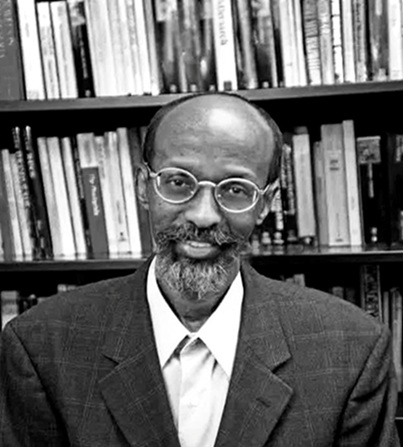
By Mohamed Haji
Many distinguished scholars have contributed to Somali Studies; few, however, have compelled it to confront its own assumptions. The late Professor Ali Jimale Ahmed belonged to the latter. His passing marks the loss of a distinguished academic, and of a voice that approached Somalia with depth, care, and a refusal to accept inherited assumptions.
To understand his work, one must begin with the time that formed him. He emerged from a generation shaped by the final phase of colonial influence and the early ambitions of an independent Somalia. It was a period marked by the idea of a greater Somalia, the promise of Africa’s early democratic experiment, and the rupture that followed with the military coup and sweeping nationalization. In that moment, education was not merely a private pursuit, but a collective responsibility. Institutions such as the Somali National University produced thinkers who saw knowledge as a duty. It is no coincidence that many of Somalia’s most formidable intellectuals came from that era. They were not trained to inherit narratives; they were compelled to interrogate them. Ali Jimale was among them.
From Mogadishu to UCLA, and later to Queens College in New York, his trajectory reflected intellectual discipline and early recognition. His transition into a professorial role soon after completing his doctorate spoke to the clarity and force of his work.
Yet titles do not explain his significance.
Having spent much of his intellectual life abroad, he remained closely bound to the questions of Somalia. His work in Somali Studies confronted a central problem: that much of what had been accepted as Somali history was shaped through external frameworks, particularly colonial interpretations that simplified what they could not fully understand. In The Invention of Somalia, he challenged these inherited narratives not by dismissing them, but by exposing their limits and insisting on a more careful reading.
In Daybreak is Near: Literature, Clan, and Nation-State in Somalia, he moved further, bringing literature, oral tradition, social structure, and political life into a single frame. His argument was clear: Somalia cannot be understood in fragments. It must be read through its language, its memory, and the intellectual systems embedded within its own traditions.
This insistence on complexity defined his scholarship.
He resisted simplification, whether imposed from outside or reproduced from within. He drew attention to the diversity within Somali society, to its linguistic, cultural, and historical variations, and in doing so challenged the flattened narratives that continue to dominate discussion. His work did not offer comfort; it demanded precision.
He was also among those who treated Somali literature not as folklore, but as an archive. Poetry, oral traditions, and storytelling were, in his work, forms of knowledge, ways in which a society remembers, argues, and understands itself. In recognising this, he helped secure a more serious place for Somali Studies within global academic discourse.
Beyond his publications, he contributed to the institutional life of the field through his involvement in academic associations and editorial work. Such contributions are less visible, but they endure. Fields do not survive on individual brilliance alone; they require structure. He understood this and helped build it.
Those who knew him speak of a man marked by humility and steadiness, a scholar whose authority did not depend on assertion.
Professor Ali Jimale belonged to a generation that engaged with Somalia across its most defining transitions, from late colonial influence to independence, from state collapse to the realities of the diaspora. To produce clear and disciplined thought across such shifts is not incidental. It reflects a deeper commitment, a sense that understanding one’s society is not optional, but necessary.
He did not simply contribute to Somali Studies. He raised its standard.
We have lost a poet, an essayist, and a scholar. Ali Jimale, former Chair of Comparative Literature at Queens College, City University of New York, was one of the rare figures who embodied the meaning of an African man of letters.
He leaves behind work that will continue to inform, challenge, and correct. Not because it offers final answers, but because it insists on better questions.
His absence will be felt.
His standard will remain.
Mohamed Haji
Email: mohaji.ahmed@gmail.com