
By Bashir M. Sheikh-Ali
This is the first in a seven-part series on Somalia’s nationhood crisis. Over the coming weeks and months, I will explore five deep tensions — paradoxes — that shape how any nation is imagined, organized, and sustained: how the nation is conceived in the mind before it exists in law, who speaks for it, who belongs to it, how it relates to the world, and how persistent conflict and external interference reshape the very ground on which nationhood is built. These tensions are not abstract ideas in Somalia; they form the living architecture of its politics today. They determine how power is won and lost, how trust is built and broken, and why stability remains out of reach for Somalia.
Specifically, these paradoxes explain why power-sharing agreements in Somalia collapse almost as soon as they are signed, why the outdated 4.5 formula continues to define political life nearly two decades after its creation, and why federalism often feels like a perpetual tug-of-war rather than the cooperative project that it was meant to be. The paradoxes are the scaffolding for this series; the reality on the ground — shaped by decades of violence, displacement, and exclusion — provides the texture and urgency.
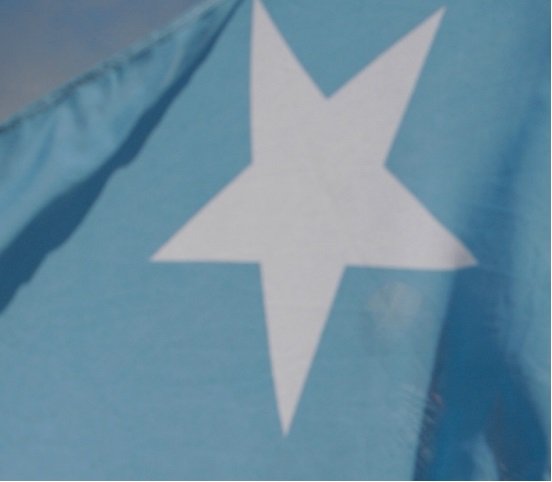
For more than thirty years, Somalia has had governments but struggled to have a nation. The symbols of sovereignty are present: a flag, an anthem, a seat at the United Nations, and a constitution, albeit still in draft. Yet the lived reality for most Somalis does not match the image of a unified political community. The state exists, but its claim to represent “the Somali people” is often met with skepticism or outright rejection. The core problem is that a nation-state depends on a shared “we” to give its institutions legitimacy. In Somalia, that “we” has been fractured, and the state has often been the shell without the substance.
This is not simply a failure of leadership or a problem of institutional weakness. At its core, it is a crisis of nationhood — the shared sense of belonging that makes people see themselves as part of the same political project. When that sense is strong, political competition stays within agreed rules; losing an election does not mean losing your place in the nation. When it is weak, politics becomes a fight for survival, each group fearing exclusion or domination by the others.
Social psychologists have shown that identity is never fixed; it is continually made and remade in response to changing circumstances. In Somalia, the circumstances of the last three decades — chronic insecurity, elite manipulation of clan identities, the absence of functioning institutions — have narrowed the scope of national belonging rather than widening it. But this narrowing is not random. It follows the patterns of clan-based life, an older form of social order that remains deeply embedded in Somali society. In the absence of a strong state, clan structures step in to provide security, arbitration, and belonging. Yet while these structures offer immediate protection, they also constrain the growth of a broader political community, and they remain vulnerable to political manipulation and geopolitical insecurity. They bind individuals to kinship first, leaving little room for a voluntary and inclusive sense of nationhood.
The Collapse of Common Identity
When the central government fell in 1991, the collapse was not only institutional; it was symbolic. The Somali Democratic Republic had been authoritarian and often repressive, but it projected a single, if rigid, image of the Somali nation. Schools, military service, state media — all reinforced the idea that there was one political “we,” even if it did not treat all citizens equally.
Once those structures vanished, there was no resilient civic identity to hold the country together. The vacuum was filled by older and narrower affiliations. Clan and sub-clan networks, which had been pushed to the margins of official politics, became the main organizing forces. The logic of politics shifted from competing visions for the nation to competing strategies for securing resources and protection within smaller, more exclusive circles.
Violence became the normal condition of political life. What might once have been seen as a temporary disruption instead settled in as the backdrop against which all politics unfolded. The sociological concept of “chronic violence” captures this reality: when insecurity persists not for months but for years or decades, people adapt in ways that change how they see both the state and each other. They lower their expectations of public authority, no longer assuming that government can or will provide protection or fairness. At the same time, they narrow their trust to the smallest, most familiar networks — family, sub-clan, or local community — because those are the only relationships that reliably respond in moments of crisis. This erosion of trust beyond the local has a direct political consequence: the wider idea of a national “we” begins to feel abstract, unreliable, and even irrelevant to daily survival.
Clan-based orders, as scholars of customary law have observed, make this narrowing both rational and enduring. In such systems, justice and security are collective responsibilities of kinship groups rather than guarantees of an impersonal state. Honor, obligation, and protection all flow through blood ties. While this provides resilience in the absence of a functioning state, it also entrenches exclusivity: outsiders can rarely claim equal protection or status. In Somalia, the post-1991 vacuum and the violence that followed it meant that clan solidarity became the most reliable form of political belonging, but at the cost of undermining the possibility of a broader, inclusive national identity.
Belonging and Exclusion
Research on displacement and marginalization in Somalia shows that when a state collapses, it is not only its institutions that vanish — the boundaries of the nation itself are redrawn. In the absence of central authority, the power to decide who truly belongs shifts from legal frameworks to the hands of whoever can enforce their will, whether through social dominance, political influence, or armed control. Old hierarchies, informal prejudices, and wartime rivalries all resurface, shaping new definitions of legitimacy and exclusion.
In Somalia’s case, communities long pushed to the margins before the civil war saw their status harden once the state fell. Conflict allowed dominant groups to consolidate narratives about who counted as fully Somali, often based on lineage, region, or cultural markers. Displacement added another layer: in refugee camps or abroad, these divisions traveled with people, often intensifying in new settings. The nation thus became not a stable idea but a contested claim, vulnerable to manipulation by those with the means to define it for their own advantage.
This process helps explain why Somalia’s post-1991 political order has struggled to create an inclusive national identity. The collapse created a competition over belonging, and that competition has never been resolved. Instead, it has been institutionalized in political arrangements — such as the 4.5 system — that treat representation as the property of fixed groups. Once exclusion becomes embedded both in political structures and in people’s lived experiences, it shapes the possibilities for rebuilding nationhood, narrowing the vision of who can be imagined inside the “we” of the Somali nation.
The 4.5 Formula and the Politics of Belonging
The 4.5 power-sharing formula, introduced in the early 2000s, was designed primarily as a safeguard against domination by the two main rival clans. It allocated parliamentary seats to the four major clan families equally, with a half-share to a coalition of smaller clans.
On paper, this seemed pragmatic. In practice, it locked Somalia into a non-voluntarist model of citizenship — one in which political membership is inherited through bloodline. By fixing clan identity as the basis for representation, the formula tells politicians that they are delegates of their lineage first and citizens of a broader nation second.
For those outside the four major blocs, the formula delivers more than under-representation. It delivers a message: your place in the nation is partial and contingent. This is not an accident; it is built into the political structure. Over time, such rules do not just reflect the divisions in society; they reinforce them, teaching citizens to see politics as a zero-sum contest among fixed groups. The 4.5 formula is, in many ways, a codification of the logic of the clan: it protects groups from annihilation but freezes politics in categories that make broader solidarity almost impossible.
Federalism Without a Federal Nation
Federalism was meant to reconcile local autonomy with national unity. But it is not only a legal arrangement; it is also a political habit. It relies on a shared identity strong enough to make compromise at the national level possible when common interests demand it.
In Somalia, the identities most readily available and trusted remain regional and clan based. Federal institutions have too often become new stages for old rivalries, with each side treating agreements as temporary bargains rather than lasting commitments. Institutions and identities shape each other: if federal structures are built on competing and mistrustful identities, they risk entrenching those divisions rather than bridging them. This is precisely the tension of trying to graft a modern state framework onto a clan-based society: without transforming the underlying sources of belonging, the legal design cannot deliver the unity it promises.
The Empty Rhetoric of “The Somali People”
Even as exclusion deepened, Somali leaders continued to invoke “the Somali people” as if the nation were a settled and inclusive community. In practice, the phrase has often been hollow, a rhetorical veil over the reality that political belonging is mediated through clan and lineage. Lofty appeals to unity frequently conceal narrow interests, turning the language of inclusion into a tool of dominance. In Somalia, claims to speak for everyone have rarely widened the circle of belonging; instead, they have reinforced divisions, with “the Somali people” used less to unite than to legitimize exclusion.
The Five Paradoxes in Somali Terms
These paradoxes will frame the rest of this series:
1) Conception — Imagining the Nation Before the State
What happens when the state collapses and the shared national imagination collapses with it? Somalia’s experience shows how, in insecure times, narrower visions — clan, sub-clan, or region — feel safer than inclusive ones. This part of the series will explore how rival visions of the Somali nation have emerged and competed since 1991, and why inclusive visions have struggled to take root.
2) Constitution — Who Speaks for the Nation?
Representation is not just a technical matter; it is about deciding who gets to say “we” on behalf of everyone. In Somalia, political authority is often determined by arrangements that limit participation to a select few. This part will examine how these rules shape national decisions and why elite bargains so often substitute for popular consent.
3) Composition — Who Belongs, and on What Terms?
In Somalia, belonging is determined by a formula that gives some groups more political weight than others. This creates a layered citizenship, with full membership for some and permanent outsider status for others. We will look at how this affects not only political representation but also how citizens see each other’s place in the nation.
4) Confrontation — The Nation’s Place in the World
A country’s foreign posture often reflects its internal cohesion. Where legitimacy is weak at home, leaders may turn to foreign recognition as a way of bolstering contested authority. We will explore how Somalia’s international relationships both mirror and shape its domestic divides.
5.) Conflict — The Paradox of Armed Groups and Geopolitics
Persistent violence and external sponsorship of warring groups push Somalis into narrower affiliations, yet no clan can stand alone in safety. Armed groups occupy spaces wherever government is absent, as seen in the shifting battles with al-Shabaab and even in Puntland’s struggle with ISIS. Even if one group vanishes, another rises. This makes armed conflict and geopolitics a new paradox of nationhood. Somalis cannot withdraw into clan protection alone, but cannot yet rely on a government strong enough to displace armed alternatives.
6) Breaking the Feedback Loop
These paradoxes are not isolated problems; they reinforce each other. Weak nationhood fuels chronic violence. Chronic violence deepens localism. Localism cannot provide security. Localism undermines federalism. Federalism, when stripped of a shared national frame, becomes a platform for further division. This cycle serves those already in power — and those who seek power in the same way — which is why it is so difficult to break.
Breaking it means changing the conditions under which people decide who “we” are. That change happens when Somali citizenship — not just clan membership — delivers real benefits: security that does not depend on armed protectors, fair access to resources, a voice in national decisions. Scholars of clan-based societies remind us that people expand their sense of belonging when security and fairness come from impersonal institutions rather than kinship ties alone. When justice flows through bloodlines, freedom is narrow; when justice flows through laws, freedom broadens. Somalia’s challenge is to make that transition without denying the depth of clan life, but also without letting it set the boundaries of nationhood — a paradox at the very heart of Somalia’s struggle to imagine a shared future.
From Paradoxes to Possibilities
Reimagining Somali nationhood is not about erasing diversity or ignoring local loyalties. It is about making the national identity strong enough, and rewarding enough, that people can hold it alongside other identities without fear. Nationhood is not inherited intact; it is made and remade through the rules we agree on, how we enforce them, and whether we change them fairly.
The question for Somalia is not whether there is a nation, but which vision of that nation will prevail — and who it will serve. If Somalia is to survive as more than a name on a map, that vision cannot be left to the accidents of conflict or the calculations of elites. It must be built on a shared willingness to see each other in the same future, and to make that future worth sharing.
The series will close with a seventh essay bringing the paradoxes together, asking what kind of Somali nation can still be built, and what practical steps might move the country closer to a shared future.
Bashir M. Sheikh-Ali
Email: bsali@yahoo.com.
———–
The author is a Somali-American lawyer based in Nairobi. The views expressed in this op-ed are his own and do not reflect those of any organization with which he may be affiliated.