

By Nur H. Gure (Nurdiin)
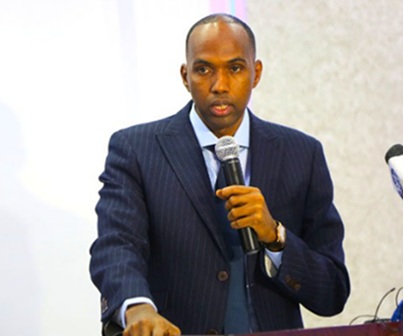
Former Prime Minister Hassan Ali Khaire has delivered a compelling critique of Somalia’s economic condition. His primary contention that ineffective governance, fragile property rights, and institutional collapse hinder the generation, protection, and investment of Somali wealth is significant and largely correct. The fundamental challenge for Somalia has never been a lack of entrepreneurial drive, but rather a deficiency in the institutions required to safeguard the fruits of that entrepreneurship.
Let me therefore be clear about what this article is not. It is not a defense of the incumbent government. Informal taxation, opaque public finances, contested land administration, shallow credit markets, and weak implementation capacity are genuine and long-standing issues. The outgoing government must remain accountable for its record on each of these matters.
However, precisely because accountability is so critical, it must be grounded in accurate evidence. In his economic opinion piece published by Dawan Africa website, Khaire misrepresents several key figures from the World Bank report he cites, conflates measures of change with absolute levels, presents projections as observed outcomes, and attributes specific causal explanations to data that do not support such conclusions. These are not minor technicalities. Statistics belong to the public record. A political class that treats numbers as tools for persuasion rather than facts to be verified cannot credibly promise a new culture of accountability. Governments must be held responsible for their actions; those seeking to replace them must be held responsible for the accuracy of their claims.
Economic Growth Decelerated Without Entering a Contraction
Khaire notes that Somalia’s real GDP growth was contracting by 3 percent in 2025. However, the World Bank’s Somalia Economic Update 2026; World Bank reports the contrary, stating that real GDP grew by an estimated 3 percent in 2025, a decrease from the 4.1 percent recorded in 2024. As population growth offset most of this expansion, real GDP per capita remained largely stagnant. While this reflects weak and insufficient performance, it does not constitute a 3 percent reduction. (World Bank, 2026, pp. vi and 3.)
This distinction is significant. An economy may expand even as households stay impoverished, prices rise, and per capita income fails to gain ground. In fact, this provides a more precise depiction of Somalia in 2025. Such criticism does not necessitate labeling a slowdown as a recession; the underlying reality is sufficiently concerning.
The inflation data is also chronologically inaccurate. Khaire claims that inflation reached 6 percent, doubling from the previous year. However, the World Bank reports national headline inflation at 3.7 percent for 2025, compared to 3.3 percent in 2024. The 6 percent figure is actually a projection for 2026, rather than the recorded result for 2025. While Banadir and Jubaland did experience inflation exceeding 5.5 percent, creating genuine pressure on households, a national forecast for a future year cannot be used as a current measure, presented as the observed national rate for another. (World Bank, 2026, pp. vi, 4 and 16.)
Khaire further states that household purchasing power fell by 5.7 percent and that 2025 represented the weakest year for business output and profit in a decade. However, his article provides no table, page reference, survey, or methodology to support either claim, and the Economic Update’s headline indicators do not report a 5.7 percent measure of household purchasing power. If a different dataset is being referenced, it should be identified. Assertions provided with decimal precision require sources of equal specificity.
Credit Growth Differs from the Total Volume of Credit
The same issue is evident in Khaire’s analysis of the banking sector. He states that business credit ‘collapsed from 30 percent in 2022 to just 14 percent in 2025. However, the World Bank’s data refers to the annual growth rate of private-sector credit. Credit growth slowed from nearly 30 percent in 2022-23 to 14 percent in 2025. Consequently, private credit did not collapse to 14 percent; it continued to expand, but at a slower rate.
Other indicators within the same report reinforce that distinction. Commercial banks’ loan-to-deposit ratios rose above 30 percent in 2025, up from levels in the mid-20s during previous years. Capital adequacy stood at 16.6 percent, exceeding the regulatory minimum, while non-performing loans remained stable at approximately 2-3 percent. Furthermore, bank profitability recovered from a loss in 2024 to reported earnings before taxes and zakat of US$9.6 million. The report characterizes the banking system as generally sound. (World Bank, 2026, pp. 8-9.)
This does not imply that Somalia possesses a sufficient credit system. On the contrary, credit to the private sector stands at approximately 5 percent of GDP, which is among the lowest levels globally, and lending is primarily concentrated in trade, construction, and real estate. The more significant and accurate critique is that while financial intermediation is expanding, it is doing so from an extremely shallow base and remains inaccessible to much of the productive economy.
Khaire is accurate in noting that banks’ cash holdings decreased from 40 percent to 35 percent of total assets over the year. However, a reduced cash ratio does not, on its own, demonstrate that land-sale proceeds were moved abroad or that such transfers triggered a banking liquidity crisis. While the World Bank highlights significant cash outflows and a Central Bank cash-export limit of US$15 million per bank—factors that warrant Investigation does not link these outflows to the purported land transactions. That causal connection must be substantiated through transaction records rather than inferred through political means. Moreover, Khaire alleges unlawful land seizures, the transfer of proceeds abroad, the existence of sixteen informal checkpoints between Afgooye and Mogadishu, and a US$320 charge per container at Mogadishu port. While these claims may warrant investigation, his article fails to identify any responsible actors, land records, contracts, invoices, court findings, banking transactions, or independent evidence sufficient to establish them as settled facts.
The food-import data highlights the distinction between a confirmed statistic and an unverified explanation. According to the World Bank, food imports decreased by 2.5 percentage points compared to the previous year. However, the organization situates this decline within the framework of diminishing foreign aid, a reduction in direct imports by aid agencies, and softened household demand. It does not credit the decrease to the purported US $320 port arrangement. (World Bank, 2026, pp. 6-7.)
Port fees and checkpoints may exist, and unlawful land transfers may have occurred. However, demonstrating their existence is merely the first step; proving that they caused specific fluctuations in bank liquidity, food imports, or national inflation is a separate challenge. Serious accountability requires establishing these causal links, requiring both evidence of the conduct and evidence of the claimed economic effect.
Khaire’s most politically significant claim is that 73 percent of the more than US$330 million allocated in 2024 and 70 percent of the more than US$407 million allocated in 2025 remained unspent. However, the article does not clarify which projects are included in these totals, the specific dates the data were retrieved, the designated implementation periods, or whether the term “allocated” denotes donor commitments, signed financing agreements, budget appropriations, available disbursements, or actual cash expenditures.
Those categories are not interchangeable. A multi-year commitment does not represent funds sitting idle in a government account. Project disbursements are contingent upon procurement processes, safeguarding compliance, verified milestones, donor conditions, security access, and the performance of implementing agencies. Delayed disbursement may reflect weak state capacity a significant governance failure without proving that officials stole or deliberately withheld the funds. There is, however, official evidence of significant under-execution. The World Bank’s federal fiscal table shows actual capital spending of approximately US$75 million against a 2025 budget of US$182 million an execution rate of roughly 41 percent, resulting in a gap of about 59 percent.
Furthermore, the Bank notes that limited capacity to implement infrastructure projects has kept Somali public investment among the lowest in the region. (World Bank, 2026, pp. 9-10 and 14-15.) That is a grave finding for which the government must be held accountable. However, this dataset differs from Khaire’s cross-institutional totals and does not validate his 70-73 percent calculation. To ensure that calculation is auditable, he should publish the project list, funding instrument, commitment date, amount legally available, amount disbursed, amount spent, and the institution responsible for every delay. A percentage presented without a transparent denominator creates an appearance of precision while concealing what is actually being measured.
The Official Record Is Already Sufficiently Damning
Correcting Khaire’s figures fails to present a favorable image of the outgoing administration. According to the same World Bank report, real per capita income remained largely stagnant, poverty reduction efforts stalled, and inflation increased. Furthermore, the fiscal balance shifted from a surplus of 0.1 percent of GDP in 2024 to a deficit of 0.4 percent in 2025, while domestic revenue continued to stay below the government’s own medium-term target.
More critically, social-benefit spending plummeted to approximately 0.1 percent of GDP in 2025, the lowest level recorded in the report, coinciding with a decline in humanitarian assistance and intensifying food insecurity. The population facing acute food insecurity was estimated at 6.5 million in February-March 2026, increasing from 4.6 million during the same period in 2025. Administration and security continued to consume nearly half of budget allocations, while public investment remained exceptionally low. (World Bank, 2026, pp. vi, 10, 13 and 16.)
These findings warrant rigorous scrutiny and demonstrate why exaggeration is unnecessary. A balanced explanation must account for the broader forces identified by independent assessments. The World Bank attributes the 2025 slowdown primarily to declining humanitarian and security assistance, drought conditions, and rising living costs. The IMF’s latest Somalia staff report Similarly, the IMF identifies foreign-aid cuts, security pressures, political tensions, and climate shocks as major risks. None of this absolves the government. While a government cannot avert every drought or force donors to sustain aid, it remains responsible for building resilience, developing water infrastructure, ensuring social protection, managing fiscal priorities, executing projects, coordinating the economy, and managing the quality of its response. Accountability entails distinguishing between what the government directly caused and what it failed to mitigate, and what lay substantially beyond its control.
Somali Deserves a Unified Standard of Truth
Khaire’s core argument remains compelling: economic success must be measured by the lived experiences of citizens, rather than through diplomatic rhetoric or headline GDP figures. National growth can occur even as households struggle. Public revenue may increase while citizens are subjected to arbitrary taxation. Credit can expand while the majority of entrepreneurs are still excluded. Furthermore, development commitments can rise even as local communities witness minimal improvement.
But that argument gains strength rather than losing it when the figures are presented accurately. State that the economy grew by 3 percent, then elaborate on why that performance was insufficient. Note that credit expanded by 14 percent, then clarify why a credit stock amounting to approximately 5 percent of GDP remains entirely inadequate. Mention that food imports declined, then illustrate the specific forces that drove that reduction. Assert that development execution is weak, then release the portfolio and pinpoint the responsible institutions.
The opposition has no less an obligation to tell the truth. Every exaggerated statistic provides the incumbent with an opportunity to dismiss legitimate criticism. Every unsupported allegation weakens those that can be proven. And every misleading comparison makes it easier for those in power to avoid answering the questions that matter.
As Khaire warns, Somalia cannot afford another term of squandered wealth. However, it equally cannot afford another political generation that permits economic statistics to be manipulated by electoral incentives. A nation’s wealth is reflected not only in its land, businesses, infrastructure, natural resources, and human capital, but also in the integrity of its information through which citizens judge those who govern them. Anyone who compromises that integrity, whether within the government or during the pursuit of power, weakens it the very institutions he promises to build. Somalia has had enough of that.
Nur H. Gure (Nurdiin)
Email: nurgure87@gmail.com
———-
References:
Hassan Ali Khaire. Somalia Cannot Afford Another Term of Lost Wealth. Dawan Africa, 18 August 2026.
World Bank. Somalia Economic Update, Edition No. 11: Navigating Shocks, Powering Growth. May 2026.
World Bank. Somalia’s Growth Continues, But Shocks and Aid Cuts Intensify Risks to Jobs and Livelihoods. Press release, 13 May 2026. International Monetary Fund. Somalia: Fourth Review Under the Extended Credit Facility Arrangement and Request for Augmentation of Access. IMF Country Report No. 2025/335, December 2025.