
By Abdiqani Haji Abdi
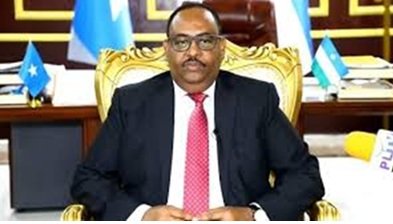
President Said Abdullahi Deni is not only the president of Puntland. He is also among the political figures seeking a role in Somalia’s national leadership, making his recent position on Puntland’s relationship with Mogadishu particularly consequential. That creates a fundamental political contradiction.
A politician seeking to lead Somalia nationally must explain how his national ambitions fit with a position that now openly raises the possibility of Puntland permanently severing its relationship with the Federal Government.
In his September 13 letter to the United Nations, Deni’s administration said Puntland was facing pressure from what it described as “huge masses” of citizens favouring full independence and warned that Puntland might eventually consider permanently severing ties with Mogadishu. The letter did not provide polling, a referendum or another representative process establishing that such a position reflects the collective will of Puntland’s population.
That does not automatically establish that Deni has adopted a formal policy of secession. The same political record is more complicated: as recently as June, Deni said Puntland had “never abandoned the federal system of Somalia” and described its position as seeking a consensus-based federal government. But the September letter has nevertheless changed the political question.
If Deni wants to become president of Somalia, Somali voters and political stakeholders are entitled to ask what political future he is seeking to lead. Is he campaigning to become president of a united federal Somalia? Or is he simultaneously presenting Puntland’s possible separation from Somalia as an option? Those are fundamentally different political propositions.
The National Presidency Requires a National Political Vision
Deni’s candidacy places his Puntland position under a much broader national spotlight. A presidential candidate is asking Somalis across the country to entrust him with the country’s political destiny. That requires a clearly articulated national vision for the future of Somalia, including the relationship between the Federal Government and the federal member states.
The independence language therefore creates an obvious political vulnerability for Deni. His opponents can reasonably ask how a candidate can seek the presidency of Somalia while his administration is simultaneously telling the United Nations that Puntland could consider permanently severing ties with Mogadishu.
That question cannot be dismissed simply as another disagreement between Garowe and Mogadishu. It goes directly to the political identity of a presidential candidate.
Puntland’s Future Cannot Be Decided by One President
There is also a separate question of mandate. Puntland was established in 1998 through a broad community-based political process involving traditional elders, political representatives, businesspeople, intellectuals and civil-society participants. Its original political project was built around regional autonomy within a future federal Somalia, rather than a declaration of sovereign independence.
That history matters because Puntland is not synonymous with whoever occupies the presidency. Deni has a mandate to lead Puntland’s administration and articulate its government’s position. But a decision as consequential as permanently separating Puntland from Somalia would raise a much larger question of popular and constitutional consent.
The September letter itself provides no evidence of a referendum or other formal process through which Puntland’s population has collectively authorized such a change. Indeed, Somalia Today reported that federal officials rejected the suggestion that the letter represented the views of Puntland’s population, while political analysts disputed the claim that secession enjoys broad support. Those are contested political assessments and should not be treated as independently established facts.
The Political Cost of Ambiguity
This is where Deni’s national presidential ambitions encounter their greatest political difficulty. He can argue that Puntland is being pushed toward separation by what his administration describes as persistent federal interference and political exclusion.
He can also argue that his reference to possible separation is a warning intended to pressure Mogadishu into reaching a negotiated settlement. But once the possibility of separation has been placed formally before the United Nations, the issue can no longer be treated simply as rhetoric.
For a politician seeking Somalia’s presidency, the central question becomes whether his ultimate political project is the reconstruction of a functioning federal Somalia or the possibility of a different political future for Puntland. That ambiguity could become a defining issue in any national presidential contest.
Puntland Is Bigger Than the Presidency
None of this means that Puntland’s grievances should be ignored. The disputes over constitutional reform, elections, federal authority and the relationship between Mogadishu and the federal member states are substantive political questions. Puntland has repeatedly argued that Somalia’s political order must be negotiated rather than imposed unilaterally. Those positions can be debated without assuming that Puntland’s people have chosen independence.
But the political destiny of Puntland cannot be reduced to a dispute between Deni and Hassan Sheikh Mohamud. Neither president owns Puntland. Neither president owns Somalia. And neither should be presumed to possess the authority to determine the ultimate constitutional future of millions of people without a legitimate political process.
The Question Deni Must Answer
For Deni, therefore, the central political challenge is no longer simply whether Puntland has legitimate grievances against Mogadishu. It is this: If you are asking Somalis to trust you with the presidency of Somalia, what Somalia are you asking them to trust you to lead?
A united federal Somalia? A radically restructured federation? Or a Somalia in which Puntland ultimately considers a separate political destiny?
Deni has the right to articulate his position. Somali voters have the right to examine the consequences and consistency of that position. The issue is not whether Puntland has the right to complain about Mogadishu. It plainly has a political voice.
The issue is whether a presidential candidate seeking to lead the entire Somali Republic can simultaneously leave open the possibility that the territory and population from which his political career is rooted may permanently separate from that republic. That is a question that cannot be answered by political rhetoric alone.
Ultimately, Puntland’s future belongs to its people, just as Somalia’s future belongs to the Somali people. If the political future of Puntland is ever to be fundamentally reconsidered, the decisive question should therefore be neither what Deni wants nor what Hassan Sheikh wants. It should be what Puntland’s people, through a legitimate and representative political process, decide for themselves.
Abdiqani Haji Abdi
Email: Hajiabdi0128@gmail.com