
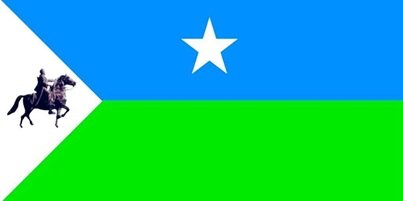
Prepared by the Advisory Council for the North East State (NES) of Somalia Executive
Summary
This brief urges the United States to reaffirm Somalia’s sovereignty and territorial integrity, reject calls to recognize the self-declared Republic of Somaliland, and support peace through African Union (AU) and IGAD-led mediation. Recognition risks fueling violent conflict, undermining U.S. interests, and destabilizing the Horn of Africa. Instead, deeper U.S. partnership with Somalia’s federal government and member states—including the newly formed North East State (NES) and Somaliland itself after its final status has been settled through negotiation with the Federal Government under the auspices of the AU—presents a stronger path for peace, security, and shared prosperity.
Background
Recent calls by U.S. lawmakers to formally recognize Somaliland ignore critical factors:1) African Union principles affirming borders at independence (July 1, 1960 in the case of Somalia).
2) The homogeneous nature of the Somali people across all regions, reinforced by strong social bonds and intermarriages that unite communities.
3) The presence of unionist communities that oppose secession vehemently and cannot be forced to join a clan-based separatism.
4) The voluntary union of Somali territories that created modern Somalia.
5) Strong opposition within regions of the former Somaliland, notably NES and Awdal.
Somalia’s clans have historically been homogeneous and closely interconnected across colonial boundaries. For centuries, Somali nomadic communities crossed these artificial borders freely in search of better grazing lands for their livestock, underscoring the shared identity and unity of the Somali people despite imposed divisions.
Former U.S. Ambassador to Somalia, Larry André (2022–2023), has explicitly warned that swift U.S. recognition of Somaliland could destabilize the Horn of Africa and undermine Washington’s regional relationships. He emphasized that Somaliland’s internal support is largely limited to one clan, while broader Somali communities back unity. In his policy essay “Somaliland Status: A Policy Review”—he outlined three U.S. policy paths and recommended caution, favoring a liaison office in Hargeisa over formal recognition. Read Ambassador André’s essay here;
Key Issues:
1. Colonial Borders and International Law
The African Union (AU) Charter enshrines the principle of uti possidetis juris—respect for the borders of African states as they stood at independence. For Somalia, these borders were fixed on 1 July 1960, when the former British Somaliland and Italian Somaliland voluntarily united to form the Somali Republic. Recognizing Somaliland today would violate this foundational principle and encourage border revisions across Africa.
International precedent reinforces this principle. The AU and the wider international community have consistently rejected unilateral secessionist claims—from Biafra in Nigeria (1967–1970), to Katanga in the Congo (1960s), and more recently in Cabinda (Angola) and Casamance (Senegal). The only exception, South Sudan, followed decades of internationally mediated conflict, a peace agreement, and a UN- and AU-endorsed referendum. By contrast, Somaliland lacks such a framework, broad consent, or international mandate.
U.S. policy has historically upheld Somalia’s territorial integrity in line with AU norms and global consistency, just as Washington opposes unilateral border changes in Ukraine and Georgia. Unilateral recognition of Somaliland would undermine this precedent and open the door to separatist claims across Africa.
2. Ground Realities and Clan Politics
The NES and Awdal communities firmly reject secessionist aspirations. While NES has successfully liberated itself from Somaliland’s rule, Awdal remains administered by Somaliland against the will of its people. Within Somaliland, electoral politics are dominated by clan allegiances, perpetuating instability rather than fostering inclusive democracy. Recognition under these conditions risks triggering renewed conflict, echoing the trajectory of South Sudan. Unionist clans are systematically excluded from political representation, as all three registered parties are controlled by clans favoring separation.
NES territories have also paid a steep human cost for rejecting Somaliland’s secessionist project. From Las Anod and surrounding districts to Buhodle, communities endured over eight months of sustained shelling and indiscriminate attacks. Recognition would not only undermine international law but also validate coercion against Somali populations who choose unity.
3. U.S. Interests at Stake
Recognition alienates over 17 million Somalis in favor of a self-declared enclave. Somalia offers strategic advantages:
– Deep-water ports (e.g., Las Qoray, adjacent to rich tuna grounds).
– Proven oil reserves in Holhol and offshore energy potential.
– Broader counter-terrorism cooperation across federal states.
4. Security Cooperation
The U.S. base in Djibouti anchors regional security. Collaboration with Somalia’s recognized federal government—including NES, Puntland, Jubaland, Galmudug, Hirshabelle, and South West—meets U.S. goals more effectively than fragmentary recognition.
Policy Recommendations
The Advisory Council for NES urges the United States to:
1) Reaffirm Somalia’s sovereignty – Uphold AU principles and maintain U.S. policy of supporting a unified, federal Somalia.
2) Support inclusive dialogue – Facilitate a federal dialogue involving Mogadishu, Hargeisa, NES, and other stakeholders.
3) Leverage Somalia’s economic potential – Invest in fisheries (Las Qoray) and energy (Holhol oil) to anchor economic resilience.
4) Strengthen U.S.–Somalia security cooperation – Expand maritime and counter-terrorism partnerships through Somalia’s federal framework.
5) Champion stability over fragmentation – Follow Ambassador André’s middle-way: open a U.S. liaison in Hargeisa without formal recognition, while advocating diplomacy rather than division.
About NES
The North East State (NES) represents Somali communities within former British Somaliland boundaries that oppose secession. Its territories encompass areas formerly held by Somaliland forces but liberated through local resistance. NES combines:
1)k Strategic deep-water ports such as Las Qoray
2) Rich fishing grounds in the Arabian Sea
3) Vast mineral resources, including tin and gold
4) The Holhol oil prospect in the Xuddun district of Sool region, estimated by some geologists to contain significant reserves
NES stands as a federal and stable alternative to secession, reinforcing Somalia’s unity and resilience. It has successfully completed the ratification of its draft constitution, providing a strong legal framework for governance and democratic participation. While the current elections were not conducted on a universal suffrage basis, NES has demonstrated its commitment to inclusivity and reform. Notably, the Speaker of Parliament is not drawn from the two dominant clans in NES, reflecting a deliberate effort to move beyond entrenched clan politics. In another groundbreaking step, a woman was elected as the First Deputy Speaker of Parliament—an unprecedented achievement among all Somali federal states and a milestone for gender representation. NES has committed to progressively expanding political inclusion and plans to hold free and fair elections based on the principle of one person, one vote within the next five years, ensuring broad-based legitimacy and alignment with international democratic standards.
With NES now established as a Federal Member State—and political dynamics in the northwest (including Awdal) still unsettled—extending U.S. recognition to Somaliland in its current form would risk incentivizing attempts to alter boundaries by force, including efforts to reassert control over NES-administered areas. Such a step would undermine AU- and IGAD-led processes and the AU principle of respecting borders at independence, and could inadvertently fuel wider instability in the Horn of Africa. The United States should instead support an inclusive, Somali-led dialogue within the federal framework to safeguard regional stability.
Ali H. Abdulla
Advisory Council, North East State of Somalia
Email: aliegeh@gmail.com