
By Mohamed A Yasin
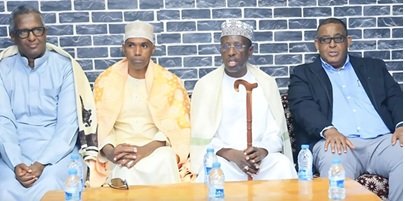
Somalia’s opposition figures are returning to Mogadishu en masse, launching what many see as the beginning of a coordinated political campaign ahead of the 2026 elections. Their return signals the waning power of President Hassan Sheikh Mohamud, whose administration is now mired in domestic unrest, institutional decay, and eroded legitimacy.
For years, the opposition gave the president what one senior figure described as “a generous political breathing space.” But that period of restraint, they now say, has come to an end. President Hassan has spent his time “jumping from fire to fire,” embroiled in scandal, authoritarian overreach, and failed military ventures.
“He has tirelessly built our platform for us,” said former PM Khayre, one of returning opposition leader. “Now, we’re here to claim it.”
The list of grievances against the president is long:
1) Illegal Public Land Sales: Nearly all public properties in Mogadishu—once earmarked for schools, hospitals, and public use—have been quietly sold off in opaque deals. Most of these transactions involved individuals close to Villa Somalia and were deliberately shielded from public scrutiny. “This wasn’t privatization; it was looting,”said a former land commission official.“Entire neighborhoods were sold piece by piece, and no one can account for where the money went.”
2) Rampant Nepotism: President Hassan has made nepotism a hallmark of his administration, packing key offices with loyalists and clan affiliates. Professionalism and meritocracy, critics say, have been wholly abandoned.
3) Constitutional Overreach: He unilaterally drafted a new constitution and sidelined parliamentary procedures and public consultations, effectively replacing Somalia’s federalist foundation with a presidential system of his own design.
4) Election Commission Takeover: The electoral commission has been stacked with handpicked allies, raising alarms that the 2026 election will be neither fair nor credible.
5) Foreign Policy Contradictions: His government signed defense agreements with multiple foreign powers—some of them adversaries of each other—drawing criticism that Villa Somalia’s foreign policy is dangerously incoherent.
6) Parliamentary Capture: The Federal Parliament has effectively become an extension of the executive, approving major decisions without proper debate, quorum, or transparency. Critics note that the Speaker and deputies act as agents of the presidency rather than neutral facilitators of legislative process.
7) Federal Collapse: Nearly all legitimate Federal Member States—most notably Puntlandand Jubaland—have severed ties with the federal government. The remaining three (Hirshabelle, Galmudug, and South West) are now widely seen as Villa Somalia satellites, with their mandates expired and no legitimacy to govern.
8) Military and Security Failures: The administration’s ill-prepared offensive against Al-Shabaab has crumbled. Large territories have been recaptured by militants, and the Somali National Army (SNA) has suffered major losses. Morale is at rock bottom, and the state’s security apparatus is stretched thin.
Amid these failures, President Hassan continues to push for one-person, one-vote (OPOV)elections—a vision many view ascompletely detached from the realities on the ground.
“You cannot pretend to build a democracy while the state is collapsing in your hands,”said Hassan Ali Khayre, a former Prime Minister and prominent opposition figure. “This administration has lost control beyond a few city blocks in Mogadishu. Balcad and Afgoye — both less than an hour’s drive from the capital — are inaccessible, and Al-Shabaab is knocking at the gates. Yet the president is fixated on one-person, one-vote elections as if Somalia is functioning like a stable democracy.”
Khayre emphasized that President Hassan’s electoral agenda is “untethered from the security and political realities on the ground“, warning that the president’s obsession with elections risks further empowering extremist groups and alienating regional actors.
- Partisan Power Grab: President Hassan’s newly formed political party violates nearly every norm of democratic governance. He serves as both chairman and candidate. His Prime Minister and cabinet are party members, and even the second deputy speaker of the House of the People is the party’s deputy chair—while still trying to preside over House sessions.
“This is a grotesque mockery of parliamentary impartiality,”said a constitutional scholar in Mogadishu.“Parliament is now chaired by party operatives with no regard for neutrality or law. It’s a complete breakdown of checks and balances.”
Adding insult to injury, analysts say, is the lack of education and experience among current House leaders, which has turned the legislature into a rubber-stamp institution devoid of independent oversight.
Former Prime Minister Omar Abdirashid Ali Sharmarke, who met with President Hassan Sheikh. According to sources familiar with the meeting, Sharmarke bluntly told the president that the idea of holding nationwide OPOV elections under current conditions is simply not feasible. The president, however, appears unmoved. During the meeting, he reportedly attempted to convince Sharmarke that elections could proceed in select areas under government control — a proposal critics see as both divisive and dangerous.
“This is not just political arrogance,” said a civil society analyst. “It’s a failure to grasp how deeply fractured the country is — politically, territorially, and institutionally.”
Meanwhile, President Hassan has begun accusing the opposition of being “bribed by foreign countries”—a charge that has failed to gain traction among the increasingly skeptical Somali public.
“The people aren’t buying anything this lone man says anymore,” remarked a civil society activist. “He’s a burned-out political figure trying to douse the fire he lit himself.”
As the 2026 elections approach, one fact appears inescapable: President Hassan Sheikh Mohamud’s credibility is shattered, and his re-election ambitions are now seen by many as both unrealistic and destabilizing.
Mohamed A Yasin
Email: moyasin680@gmail.com