
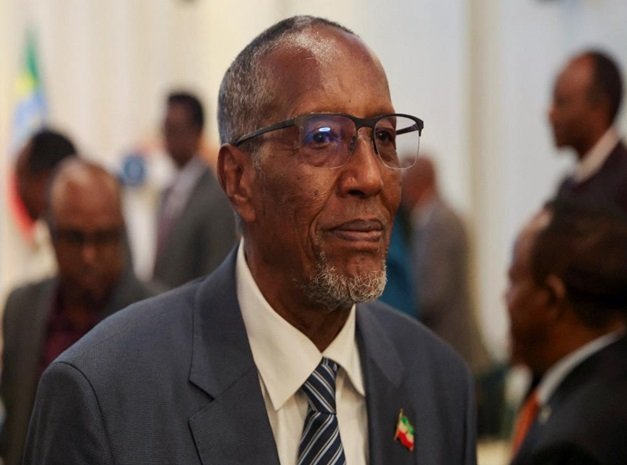
Hargeisa (WDN) – Former Somaliland President Muse Bihi Abdi has called on the Somaliland government to carefully reassess its diplomatic posture, warning that rapidly changing geopolitical dynamics in the Middle East could dramatically reshape alliances across the Horn of Africa and beyond.
In a statement that has attracted significant political attention, Bihi urged the government to reconsider its understanding with Israel, arguing that the evolving international landscape demands strategic caution and foreign policy decisions firmly anchored in Somaliland’s long-term national interests.
“Today, the world is facing profound political transformations and geopolitical turbulence,” Bihi said. “The conflict in the Middle East has already begun to cast its negative effects over the Horn of Africa.”
The former president pointed to the ongoing diplomatic engagement between Iran and the United States, saying its outcome could fundamentally reshape the global political, security, and economic order, particularly in the Middle East and the Horn of Africa.
According to Bihi, the growing influence of major Muslim powers including Iran, Pakistan, Türkiye, Egypt, and Saudi Arabia is becoming increasingly evident. He said the changing regional landscape could encourage closer cooperation among these countries.
Bihi also suggested that emerging policy differences between the leaderships of the United States and Israel could become a significant factor in reshaping international alliances, with consequences that should not be underestimated.
“It is becoming increasingly clear that the geopolitical landscape is changing,” he said. “These developments will have far-reaching implications that require careful analysis rather than hasty political decisions.”
The former Somaliland leader urged the current administration to conduct a comprehensive assessment of the risks and opportunities arising from these global shifts before committing itself to long-term diplomatic arrangements.
“It is essential that the government—particularly the Somaliland administration—carefully evaluate the potential consequences of these international developments to avoid strategic miscalculations that could undermine the nation’s interests,” he said.
Bihi stressed that both past decisions and future foreign policy initiatives should be continuously reviewed and aligned with Somaliland’s national interests rather than short-term political considerations.
His remarks have been widely interpreted as a call for strategic prudence at a time when the international order is undergoing significant realignment. Rather than viewing foreign policy through a static lens, Bihi argued that Somaliland must remain adaptable to an increasingly fluid geopolitical environment, where shifting alliances and regional power dynamics could redefine diplomatic priorities.
The statement has reignited debate over Somaliland’s foreign policy direction, with many observers describing it as one of the clearest acknowledgments by a senior Somaliland political figure that developments far beyond the Horn of Africa could significantly influence the region’s diplomatic, economic, and security landscape in the years ahead.
WardheerNews