
By Dayib Sh Ahmed
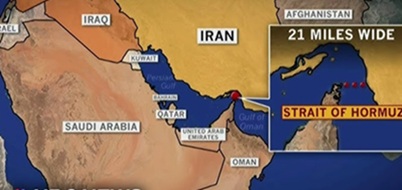
For generations, strategists have argued that geography shapes power. Yet geography can also become a trap. The latest confrontation over the Strait of Hormuz illustrates a sobering reality military superiority does not automatically translate into strategic success. Despite claims that Washington has outmaneuvered Tehran, the emerging landscape suggests that the United States, Israel, and America’s Arab partners may ultimately bear some of the heaviest costs of prolonged instability. The closure of the Strait of Hormuz for nearly four months or even the sustained threat of such a disruption would expose a fundamental weakness in the regional security architecture that the United States has spent decades building.
Such a prolonged crisis would send shockwaves through global energy markets, increase shipping costs, raise insurance premiums, and intensify economic uncertainty. The Gulf monarchies, whose economies depend on the free flow of energy exports and maritime commerce, would bear some of the earliest and most severe consequences. The risks extend beyond economics. The Gulf states rely heavily on desalination to provide fresh water for their populations. In 2026, desalination provides approximately 90% of drinking water supplies in Kuwait and Bahrain, nearly 99% in Qatar, around 70% in Saudi Arabia, 42% in the United Arab Emirates, and about 86% in Oman. If Iran were able to damage or disrupt the region’s desalination infrastructure, including dozens of major facilities, the result could become a humanitarian crisis affecting millions of people. Similarly, if U.S. or Iranian attacks target essential civilian infrastructure, they raise serious questions under international humanitarian law. Former war crimes prosecutor Reed Brody explains that the targeting of civilian infrastructure, including desalination plants, can constitute a serious violation of international humanitarian law.
The strategic importance of the Strait of Hormuz extends far beyond the Gulf itself. Around 20% of the world’s oil supply and roughly 25% of global maritime oil trade pass through this narrow waterway, representing approximately 20 million barrels of crude oil and petroleum products every day. Any prolonged disruption would immediately affect global energy markets. The crisis could also threaten another critical chokepoint: the Bab al-Mandeb Strait, where an estimated 5% to 12% of the world’s seaborne-traded oil passes depending on geopolitical conditions and alternative pipeline routes. This strategic passage handles approximately 4 to 4.2 million barrels of crude oil and petroleum products daily. Together, these chokepoints demonstrate how regional conflicts can quickly become global economic crises.
This demonstrates that modern conflicts are no longer measured only by military strikes, they are also defined by the ability to disrupt critical civilian systems. Furthermore, according to The Washington Post, Iran’s strikes against U.S. military assets in the Middle East have caused significantly more damage than previously acknowledged. A satellite imagery analysis by the newspaper found that Iranian airstrikes damaged or destroyed at least 228 structures and pieces of equipment at American military facilities since the beginning of the conflict, including aircraft hangars, barracks, fuel depots, radar systems, communications infrastructure, and air defense equipment.
The scale of the destruction appears to be substantially greater than what the U.S. government has publicly disclosed. The attacks also affected the operational posture of American forces in the region. The threat of continued Iranian strikes forced some U.S. bases to reduce staffing levels, while commanders relocated many personnel away from vulnerable locations early in the conflict. The episode demonstrates a broader strategic reality: even the world’s most advanced military power remains vulnerable to sustained asymmetric attacks against critical infrastructure and forward-deployed forces.
For Israel, prolonged regional confrontation carries its own strategic costs. While its military deterrence remains formidable, recurring conflicts consume resources, discourage investment, and increase the risk of wider regional escalation. Security achieved through continuous confrontation is expensive and difficult to sustain over the long term.
As The New York Times columnist Thomas L. Friedman argued, Israel’s current approach reflects a strategy centered on overwhelming immediate threats through military force but lacking a clear pathway toward long-term political outcomes. Friedman wrote that Netanyahu’s strategy could be described as: “Meet every threat around you by smashing it with a sledgehammer, no matter how many enemies of Israel it makes, and offer no creative ideas for translating military achievements into lasting strategic gains not in Gaza, Lebanon, Syria and the West Bank or with Saudi Arabia and Iran.” Similarly, Rahm Emanuel, former White House Chief of Staff to President Barack Obama, criticized Prime Minister Benjamin Netanyahu’s policies during a speech at Tel Aviv University, warning of the consequences of diplomatic isolation. Referencing a saying from his grandmother, Emanuel stated “You lost America, you lost Europe, and you picked up Somaliland Such a deal.” Although Somaliland is part of the Federal Republic of Somalia, these criticisms reflect a broader strategic debate. Israel is also widely accused of being an apartheid state and a pariah state. Human rights organizations and many legal scholars have concluded that Israel has committed war crimes and crimes against humanity in Gaza Palestine.
A similar challenge confronts the United States, which faces diminishing returns from its expanding commitments in the Middle East. Maintaining naval dominance, protecting critical energy infrastructure, supporting regional allies, and deterring multiple adversaries require enormous financial and military resources. Like Britain’s experience during the Suez Crisis, prolonged entanglements can expose the limits of even the most powerful states. Sir Anthony Eden resigned as Prime Minister of the United Kingdom on January 9, 1957, following the political fallout from the Suez Crisis, a setback compounded by his declining health. If current trends continue, President Donald Trump’s expanding war in the Middle East may ultimately be remembered as a strategic overreach rather than a lasting success. History suggests that military and political commitments that continually expand without delivering clear strategic gains often impose mounting economic, diplomatic, and political costs. Whether this becomes Trump’s “Suez moment” will depend on future events, but the risk of strategic failure is substantial.
At a time when Washington seeks to compete globally, every additional commitment in the Middle East stretches its strategic bandwidth. History suggests that even the greatest powers can become overextended when they underestimate determined regional rivals. As Iran’s Foreign Ministry spokesperson argued in a post on X, the Roman worldview regarded Rome as the unquestioned center of civilization. Yet the Persians challenged that assumption. When Emperor Marcus Julius Philippus (Philip the Arab) marched east against Persia, the campaign failed to secure a Roman triumph. Instead, peace was concluded on Sasanian terms, forcing the emperor to accept humiliating concessions. Contemporary assessments reinforce the enduring importance of military deterrence. Indeed, according to The New York Times, U.S. intelligence assessments indicate that Iran retains substantial missile capabilities despite recent military exchanges, suggesting that its missile arsenal remains a significant factor in any future confrontation.
These strategic realities extend well beyond Washington and Tehran. The Gulf states confront an equally difficult equation. They seek stability to attract investment, diversify their economies, and transition beyond oil dependence. Yet persistent geopolitical tensions force them to devote greater resources to defense while increasing uncertainty for international markets. As regional instability becomes the norm rather than the exception, their economic transformation becomes increasingly difficult.
Ultimately, perhaps the greatest misconception in international politics is the belief that geopolitical competition produces clear winners. History teaches a more sobering lesson: major-power conflicts often leave all sides weakened. The First World War did not produce a true victor in strategic terms; instead, it devastated Europe’s strongest empires, destroyed generations of lives, and created the conditions for future instability.
The Iraq War’s Greatest Lesson: Winning Battles Is Not the Same as Winning Wars.
The Iraq War reshaped the Middle East, but it also imposed immense costs on both Iraq and the United States. It demonstrated a recurring truth of international conflict: strategic competition rarely produces clean victories. Instead, wars often create consequences that exceed the original expectations of those who initiate them. Iran’s ability to create uncertainty in the region without sustaining a prolonged conventional blockade illustrates another enduring lesson of modern warfare: asymmetric power remains a powerful strategic instrument. The true measure of strategic success is not simply who possesses the largest military, fires the most missiles, or commands the most advanced weapons systems. The decisive question is who can impose sustained political, economic, and psychological costs on an opponent over time.
As General David Petraeus and historian Andrew Roberts argue in their book Conflict: The Evolution of Warfare from 1945 to Ukraine, they write, “Technology and firepower alone cannot guarantee victory. The nature of war has evolved, but the fundamental challenge remains the same: military operations must ultimately serve political objectives.”
The Iraq War became the most costly, American conflict since Vietnam. The Bush administration entered Iraq for multiple reasons, but one of its central justifications the alleged existence of weapons of mass destruction proved to be based on flawed intelligence. Similarly, today there is a danger that policymakers may once again underestimate the long-term consequences of military intervention. While the initial military campaign successfully defeated the Iraqi armed forces and removed Saddam Hussein from power, the conflict did not end with the fall of Baghdad. Instead, a prolonged insurgency emerged, and competing sectarian and political factions fought for power, influence, and resources. The central lesson from Iraq is not that military force is ineffective, but that military success without a realistic political strategy is incomplete. As Carl von Clausewitz wrote in On War, war is ultimately a continuation of politics by other means.
The political foundations of war matter more than the brilliance of battlefield operations alone. The United States invested enormous effort in designing a plan to defeat Saddam Hussein’s military, but far less attention was devoted to the difficult task that followed, rebuilding a state after the collapse of its institutions. Removing a government is often easier than creating a legitimate replacement. “They further argued that.” furthermore, Winston Churchill, reflecting on the First World War, warned that leaders must never underestimate the complexity and consequences of war. The same mistake occurred in Iraq. American policymakers assumed that Iraqi society would quickly embrace the coalition’s presence and that stabilization would be relatively straightforward. When those assumptions proved false, it took years to adjust strategy, resources, and doctrine.
The Iraq experience also challenged the idea that advanced technology could eliminate the uncertainty of war. After the Cold War, many military thinkers promoted the concept of a “revolution in military affairs,” emphasizing precision weapons, intelligence networks, and advanced surveillance systems. These capabilities transformed conventional warfare, but they could not replace the human requirements of stabilization and counterinsurgency. The lesson from Iraq was clear “shock and awe” can defeat an army, but it cannot build a nation. High-tech weapons can destroy targets, but they cannot create political legitimacy, secure communities, or resolve social divisions. Stability ultimately required large numbers of personnel working alongside, forces, local leaders, and tribal partners.
Counterinsurgency demonstrated an old truth of warfare, numbers matter, but strategy matters even more. Security for the population must come first, because without security, reconstruction, governance, and political reconciliation cannot succeed. The broader lesson extends beyond middle East. Whether examining Iran’s regional strategy, Russia’s war in Ukraine, or great-power competition between the United States and China, modern conflicts are not decided only by weapons. They are contests of endurance, legitimacy, alliances, economics, and political will. The nations that understand this reality will shape powers has repeatedly created dangerous.
As Graham Allison argues in his book Destined for War, the rivalry between rising and established powers has repeatedly created dangerous moments throughout history. Drawing from Thucydides’ analysis of the Peloponnesian War, Allison suggests that when a rising power threatens to displace an existing dominant power, the resulting fear and insecurity can make conflict more likely. He argues that this pattern has appeared throughout history, creating what he calls the “Thucydides Trap. and He wrote “There is nothing new under the sun except nuclear weapons.” While the twenty-first century appears fundamentally different because of globalization, economic interdependence, digital communication, climate challenges, and transnational threats, history warns against assuming that humanity has escaped its old patterns. As economists Carmen Reinhart and Kenneth Rogoff demonstrate through their study of hundreds of financial crises across centuries, societies repeatedly convince themselves that their circumstances are unique until history proves otherwise.
This same illusion existed before World War I. Norman Angell’s famous book The Great Illusion convinced millions that economic ties among nations had made major war irrational and impossible. Many believed that modern commerce had created a world where conflict between industrial powers no longer made sense. Yet in 1914, Europe entered one of the most destructive wars in human history.
The critical difference between the past and the present, however, is the existence of nuclear weapons. For the first time, humanity possesses the ability to destroy itself on a scale unimaginable to previous generations. After the United States dropped atomic bombs on Hiroshima and Nagasaki, Albert Einstein warned that nuclear weapons had changed the nature of human conflict forever. The challenge of the modern age is therefore not only managing rivalry between great powers, but ensuring that competition does not cross the threshold into catastrophe.
The lesson of history is clear, technological progress does not automatically produce political wisdom. Human nature, ambition, fear, and miscalculation remain powerful forces. The question facing the twenty-first century is whether nations can learn from the tragedies of the past before repeating them on a far more dangerous scale. the future. Those that believe technology alone can substitute for strategy may discover, as history repeatedly shows, that winning the first battle is often the easiest part of war.
Dayib Sh. Ahmed
Email: Dayib0658@gmail.com
——
Dayib is a writer, political analyst and WardheerNews contributor
————-
References
The Washington Post
Iran has hit far more U.S. military assets than reported
https://www.nytimes.com/2026/05/12/us/politics/iran-missiles-us-intelligence.html
How Israel Lost Its Way and How Trump Can Save Lebanon
speech
Rahm Emanuel, White House Chief of Staff to President