
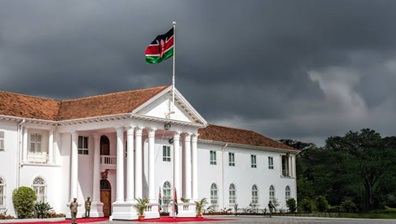
Nairobi (WDN) – Leaders from Kenya’s North Eastern region left State House in an unusually reflective mood after President William Ruto reportedly confronted them over what he described as the region’s low levels of civic participation.
Speaking after the meeting, Garissa Governor Nathif Jama said the delegation departed the presidential residence feeling “embarrassed” following the President’s blunt questions about why many residents of Kenya’s Somali-majority counties have yet to obtain national identity cards or register as voters.
According to Nathif Jama, President Ruto questioned whether local leaders were doing enough to encourage their communities to fully exercise their rights as Kenyan citizens.
Reports from the meeting indicate that the President asked the delegation why significant numbers of eligible residents in North Eastern Kenya had still not acquired National ID cards or enrolled as voters.
“If your people are truly Kenyan citizens, why are so many still without national identity cards and why are they not registering to vote?” the President reportedly asked.
Governor Nathif said the remarks left the delegation with a renewed sense of responsibility.
“We left State House feeling embarrassed,” he said, acknowledging that the questions underscored the need for greater efforts to encourage civic participation across the region.
President Ruto reportedly urged the Somali leaders to launch a broad public awareness campaign encouraging residents to obtain national identification documents and register to vote, arguing that stronger participation would translate into greater political influence for North Eastern Kenya.
According to reports, the President also offered a longer-term political vision. He is said to have told the delegation that after completing his second and final term in office, he would be prepared to support a qualified Kenyan Somali candidate for a senior national leadership position. However, he reportedly stressed that such a prospect would depend on the community demonstrating its political strength through higher voter registration and electoral participation.
If accurately reported, the exchange highlights Nairobi’s growing emphasis on integrating historically marginalized regions more fully into Kenya’s democratic process. It also serves as a reminder that political influence is often determined not only by population size but by active participation in elections.
The meeting has since sparked discussion among Kenyan Somalis about the importance of securing national identification documents, registering to vote, and increasing civic engagement as a pathway to stronger political representation at the national level.
WardheerNews