
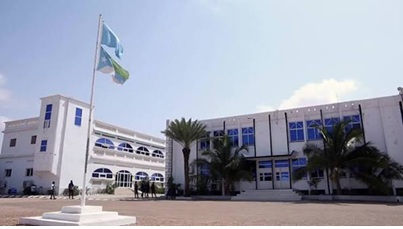
Kismayo (WDN) — Jubaland’s Ministry of Endowments and Religious Affairs has rejected a proposed law establishing a Somali Council of Scholars, arguing that the bill could encroach on responsibilities exercised by Federal Member States and further strain Somalia’s federal system.
In a statement, the ministry said the legislation, submitted by the Federal Ministry of Endowments and Religious Affairs, covers religious, cultural and social matters that Jubaland considers to fall within the responsibilities of the states.
Jubaland maintains that these matters cannot be regulated at the national level without consultation with the Federal Member States, particularly where a proposed institution could overlap with existing state structures.
A Parliament with an Expired Mandate
The Federal Parliament’s mandate expired in April 2026, yet it continues to consider legislation with significant political and institutional implications. The Scholars Council bill has reportedly been before Parliament for approximately three years but was not advanced amid concerns over funding and the lack of consultation with the Federal Member States.
Jubaland now questions the legitimacy of reviving the legislation under a parliament whose mandate has expired, particularly when the concerns that stalled the bill have not been resolved.
Jubaland’s principal concern is that a national council responsible for religious affairs could create overlapping authority with institutions already operating within the Federal Member States.
The ministry has called for the bill to be reviewed and discussed with the states before further legislative action is taken. The Federal Government, meanwhile, views the proposed council as a mechanism for coordinating Somali religious scholars and strengthening their role in national religious and social affairs.
The disagreement comes amid broader tensions between Mogadishu and several Federal Member States over constitutional amendments, elections, security and the division of political authority.
The proposed council has therefore become another test of Somalia’s federal arrangement: whether national institutions can be established unilaterally or must be developed through agreement between the Federal Government and the states.
Legitimacy Before Legislation
The central issue is not whether Somalia can benefit from a national body representing religious scholars. It is whether this particular bill can legitimately proceed under the current circumstances.
Parliament’s mandate expired in April, while the legislation has remained unresolved for years because of funding and consultation concerns. Advancing it without addressing those issues risks creating another institutional dispute.
Before proceeding, the authorities should establish the council’s legal foundation, clearly define its powers, resolve its financing and secure meaningful participation from the Federal Member States. That would provide a clearer basis for legislation while reducing the risk of another confrontation over federal authority.
The dispute could become another flashpoint in Somalia’s broader political crisis if the Federal Government proceeds without addressing Jubaland’s objections. The proposed council may have a legitimate national purpose, but its creation must be consistent with Somalia’s federal structure.
The immediate question is therefore simple: can a parliament whose mandate expired in April legitimately enact legislation that could reshape the relationship between the Federal Government and the states?
Jubaland’s answer is no. The ministry has called for the bill to be reconsidered and subjected to a process that includes the Federal Member States before it moves forward.
WardheerNews