
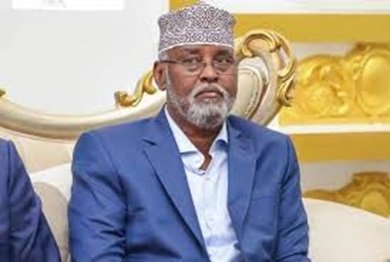
KISMAYO (WDN)— Jubaland President Ahmed Mohamed Islam (Ahmed Madobe), met with a delegation from the SSC-Khatumo Traditional Council this week in Kismayo, in what observers describe as a politically symbolic engagement highlighting shifting alliances and power dynamics in Somalia.
The delegation was led by Garad Jama Garad Ali, the Chief Traditional Leader of SSC-Khatumo and one of the most respected figures in the region’s sociopolitical fabric. Speaking after the meeting, Garad Jama confirmed that President Madobe hosted the council at an honorary dinner, where discussions touched on national unity, regional transformations, and the evolving political agenda of SSC-Khatumo.
“President Ahmed Madobe welcomed us with great hospitality. He spoke candidly about the state of the nation, the changes affecting the northern regions, and how we can collectively strengthen unity and mutual respect,” said Garad Jama in a statement.
The meeting comes on the heels of Somali Prime Minister Hamza Abdi Barre’s noteworthy visit to Las Anod—a region at the heart of the SSC-Khatumo movement—raising questions about Villa Somalia’s outreach and the growing regional sway of Jubaland leadership.
Political analysts see Madobe’s engagement with SSC-Khatumo elders as a calculated step to expand his political influence beyond Jubaland and into the new Federal Member State of SSC-Khatumo, particularly at a time when the Federal Government is perceived as politically weakened.
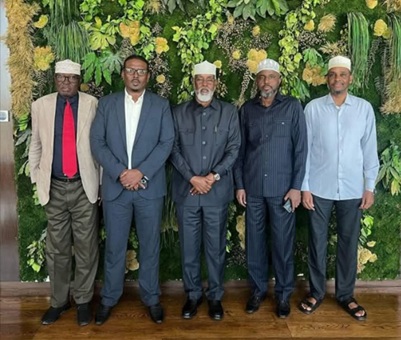
“This is not just a courtesy visit. It’s a strategic alignment,” said Dr. Amina Warsame, a Horn of Africa political analyst based in Nairobi. “Ahmed Madobe is seizing the moment to build alliances with emerging regional actors, especially as Villa Somalia is losing credibility in several parts of the country.”
“SSC-Khatumo’s traditional leadership has gained enormous grassroots legitimacy after the Las Anod uprising,” she added. “By engaging them directly, Madobe is positioning himself as a national statesman—someone who listens and acts beyond the narrow confines of federal politics.”
Las Anod has been at the epicenter of a long-standing standoff between Somaliland forces and the local SSC-Khatumo communities, culminating in a strong push by locals to assert autonomy and realign with Somalia’s federal system. Jubaland, which has long advocated for decentralized governance and local agency, finds natural allies in SSC-Khatumo’s leadership.
“It’s no coincidence that this meeting follows Villa Somalia’s political missteps in Raaskambooni,” said Hussein Mohamed Guleid, a Mogadishu-based political commentator. “The defeat there signaled a turning point. Regional states like Jubaland are now asserting diplomatic independence and aligning with movements that echo their own governance philosophy.”
“Madobe is outmaneuvering Villa Somalia diplomatically,” Guleid added. “He’s building trust with traditional elders while Mogadishu is trying to centralize power through unpopular constitutional amendments.”
Signals of a Broader Coalition?
Some speculate that this meeting could be a precursor to a wider political alliance between SSC-Khatumo and other federal member states disillusioned with President Hassan Sheikh Mohamud’s administration, including Puntland.
“We could be witnessing the formation of a decentralized coalition aimed at rebalancing federalism in Somalia,” noted Dr. Abdirahman Ismail, a political sociologist. “SSC-Khatumo’s alignment with Jubaland sends a message: traditional and regional leaders are not waiting for Mogadishu to fix the system.”
As the Federal Government grapples with internal dissent and fading influence in several regions, engagements like these may well shape the future balance of power in Somalia.
WardheerNews