
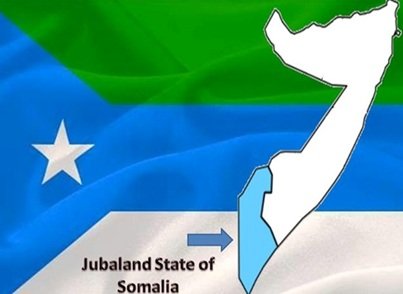
Kismayo (WDN)- A fresh confrontation between the Federal Government of Somalia (FGS) and the Jubaland administration has laid bare the deepening political rift between Mogadishu and its federal member states.
According to multiple reports, Somalia’s Infantry Commander, General Sahal Abdullahi, has been stranded for two days on the Ethiopian side of the border town Doolow, after Jubaland authorities allegedly refused to allow his aircraft to land in Doolow, Somalia. The incident marks another chapter in the long-running power struggle between President Hassan Sheikh Mohamud’s administration and the semi-autonomous state led by President Ahmed Islam Madobe.
Sources close to the matter say the Federal Government dispatched General Sahal to Doolow to assert federal authority and rally local leaders around plans for a “new Jubaland administration.” However, Jubaland officials rejected the visit outright, viewing it as a direct attempt to undermine their political legitimacy.
Local sources reported that Chairman Lafeey, Jubaland’s top representative in Doolow, blocked the aircraft from landing, prompting the delegation to divert to the Ethiopian side of the border, where General Sahal has remained since.
The Somali Ministry of Defense has not yet commented on the incident, nor has it denied claims that the commander was barred from entering Somali soil.
A Symbol of a Larger Struggle
The standoff in Doolow is not an isolated event—it reflects the broader contest between Mogadishu’s efforts to centralize control and the federal member states’ determination to preserve autonomy. Jubaland, which has long maintained its own security forces and governance structures, views many of Mogadishu’s moves as unconstitutional encroachments on its self-rule.
Relations between the two have been strained for years, particularly since President Hassan Sheikh returned to power in 2022. Jubaland leaders accuse the central government of politicizing the security apparatus and withholding development funds, while Mogadishu has repeatedly questioned Jubaland’s loyalty to the federal framework.
Doolow holds strategic importance as a border gateway between Somalia and Ethiopia, serving as both a trade corridor and a military staging ground for operations against Al-Shabaab. Control of the town is therefore politically and militarily significant — any assertion of federal power there sends a message about who truly governs Jubaland’s frontier regions.
Analysts say the Doolow standoff exposes the fragility of Somalia’s federal system, where mutual mistrust has replaced cooperation. “This is not just about one general being denied landing rights,” one regional observer told Wardheer News. “It’s about who defines Somalia’s unity — Mogadishu or the member states.”
Looking Ahead
As of now, General Sahal remains in Ethiopia, awaiting instructions. The federal government’s next move could determine whether this standoff escalates into a wider political crisis or fades as another episode in Somalia’s complex federal experiment.
With Jubaland defiant and Mogadishu under pressure to project authority, the episode underscores a simple reality: Somalia’s path to federal harmony remains fraught with mistrust, competition, and fragile alliances.
WardheerNews