
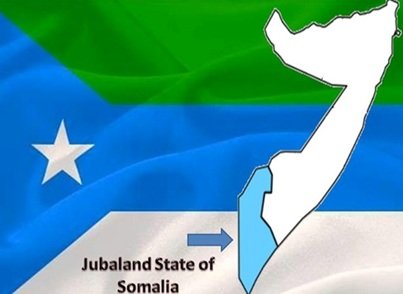
Doolow, Gedo (WDN) — Jubaland has accused Turkey and Somalia’s Federal Government of using military capabilities supplied for national defence to target political opponents, following an overnight airstrike in Doolow that wounded former Somali Custodial Corps Commander General Mahad Abdirahman Adan and four other civilians.
In a strongly worded statement, Jubaland condemned what it described as a deliberate attack by Turkish military aircraft on the house where General Mahad was staying, alleging that the operation was politically motivated because of his opposition to the Federal Government.
Jubaland said two missiles were fired during the attack, with one striking the residence of the Doolow district commissioner. General Mahad and four other civilians were reportedly wounded. The allegations have not been independently verified. The Federal Government has denied responsibility and offered a different account of the incident.
But Jubaland’s accusation raises a much larger and potentially explosive question: Are foreign-supplied weapons and drones intended to defend Somalia being used instead to settle the country’s political disputes, intimidate opposition figures and impose the Federal Government’s will on Federal Member States?
Jubaland argues that General Mahad was targeted not because he posed a security threat, but because he held political views opposed to President Hassan Sheikh Mohamud’s administration.
That allegation places the Doolow strike within Somalia’s broader political confrontation, particularly the escalating dispute over South West State and the relationship between Villa Somalia and the Federal Member States. Jubaland maintains that General Mahad was deliberately targeted because of his political position and his opposition to the Federal Government.
If independently established, such an operation would raise profound questions about the use of state military power against political opponents. The distinction between legitimate national security operations and politically motivated military action is critical in any functioning state.
Turkey’s Military Role Under Scrutiny
The most serious element of Jubaland’s statement is its direct accusation against Turkey. Ankara has become one of Somalia’s most important military partners, providing training, weapons, equipment, infrastructure and sophisticated military capabilities, including drones.
Those capabilities are ostensibly intended to strengthen Somalia’s defence institutions and help the country combat terrorism and other security threats. Jubaland is now accusing the Turkish military relationship of being used for a very different purpose.
Editor’s Analysis: If weapons, aircraft or drones supplied through Turkey’s security partnership with Somalia were used in a domestic political confrontation, it would represent a fundamental departure from the stated purpose of such assistance.
Military equipment provided to strengthen a national security institution should not become an instrument for eliminating political opponents or coercing Federal Member States. That is an allegation that demands independent scrutiny—not simply competing statements from Mogadishu and its opponents.
Somalia has received substantial international military assistance over the years on the understanding that it would be used to defend the country, combat armed extremist groups and strengthen national security institutions.
The concern raised by Jubaland is whether that mandate is being stretched into the country’s internal political disputes. If advanced drones and military aircraft are deployed against Somali political actors rather than recognized security threats, the consequences could extend well beyond the Doolow incident.
It could undermine confidence in Somalia’s security partnerships and create fears among Federal Member States that military assistance intended to protect the country could instead be turned against them.
Jubaland Calls for International Scrutiny
Jubaland called on the United Nations, African Union, IGAD, United States and European Union to closely examine what it described as Turkey’s increasingly controversial role in Somalia. The administration argues that Turkey’s involvement is no longer consistent with the interests of the Somali people or regional stability.
The statement also called on the United Nations to reconsider the decision to lift the arms embargo on Somalia until there is what Jubaland considers a sufficiently accountable government and reliable safeguards over the use of internationally supplied weapons.
That demand reflects a broader concern: who ultimately controls Somalia’s expanding arsenal of foreign-supplied military equipment, and what safeguards prevent its misuse?
The controversy could reopen a debate that many international partners considered largely settled when Somalia’s arms embargo was lifted. The purpose of easing restrictions was to allow Somalia to develop stronger national security capabilities and eventually assume greater responsibility for its own defence.
But greater access to weapons also requires greater accountability. If credible evidence emerges that internationally supplied weapons or military platforms are being used for political repression, attacks on civilians or coercion of Federal Member States, international partners would face difficult questions about the adequacy of their safeguards.
The issue is therefore not simply whether Somalia should possess advanced military equipment. It is who controls that equipment, under what legal authority, for what purpose and with what accountability.
A Blow to Turkey’s Mediation Credentials
Jubaland also issued a significant diplomatic warning to Ankara. It said Turkey should no longer be regarded as a credible participant in efforts to mediate Somalia’s internal political disputes because, in Jubaland’s view, Ankara has demonstrated that it is aligned with one side.
That could become a serious problem for Turkey. Turkey has invested heavily in presenting itself as a strategic partner, mediator and influential diplomatic actor in Somalia. But mediation requires at least a credible perception of neutrality.
Editor’s Analysis: A country cannot easily serve as an impartial mediator while being accused of supplying—and allegedly operating—the military capabilities used against one side of Somalia’s political conflict.
Even if Turkey rejects the allegation, the perception itself can damage its diplomatic standing. The Doolow incident comes at a particularly sensitive moment for Somalia.Relations between Villa Somalia and several Federal Member States have deteriorated sharply over political authority, elections, constitutional changes and control of security institutions.
Against this backdrop, the alleged use of military power against figures aligned with opposing political forces would represent a dangerous escalation. Political disagreements that should be resolved through dialogue, constitutional mechanisms and elections could instead become increasingly militarized.
That is precisely the scenario Somalia cannot afford. Federal Member States should not have to calculate whether disagreement with Mogadishu could expose their leaders, officials or communities to military pressure. Nor should foreign military partners become instruments through which one political centre imposes its authority on the rest of the country.
What Must Now Be Established
The competing accounts surrounding the Doolow attack require an investigation capable of establishing the facts. Among the questions that should be answered are:
- Was General Mahad deliberately targeted?
- What weapon caused the explosion?
- Was an aircraft or drone involved?
- Was Turkish-supplied military equipment used?
- Were Turkish personnel involved in operating or supporting the platform?
- Who authorized the operation?
- What was the legal basis for the strike?
- Why was the target selected?
- Were civilians knowingly placed at risk?
These questions cannot credibly be resolved through political accusations alone. They require physical evidence, independent forensic examination, flight or operational records where available, and testimony from witnesses. Jubaland’s accusation goes beyond the fate of one former military commander. It raises a fundamental question about the future of Somalia’s security sector:
Will foreign military assistance strengthen the Somali state—or strengthen whoever controls the government at a particular moment?
That distinction is essential. Weapons supplied to Somalia should serve the national interest, not the political survival of an administration. Drones purchased or provided to combat terrorism should not become tools for settling political scores. Military partnerships should strengthen institutions, not enable one political faction to dominate its opponents.
If the allegations surrounding Doolow are disproved, a credible investigation should establish that clearly. If they are substantiated, however, those responsible must be held accountable—including anyone who authorized, facilitated or participated in the operation.
For Turkey, the stakes are equally high. Ankara must decide whether it wants to be remembered as a strategic partner that helped Somalia build a national security capability—or as a foreign power whose military assistance became entangled in Somalia’s internal political war.
For Somalia, the choice is even more consequential. A country emerging from decades of conflict cannot build a stable state by turning weapons meant to defend the nation against its own political opponents. Military power must serve the Somali state—not whoever happens to control Villa Somalia.
WardheerNews