
By Axmed-Yaasiin Maxamed Sooyaan
Translated into English by Abdikarim Haji Abdi Buh
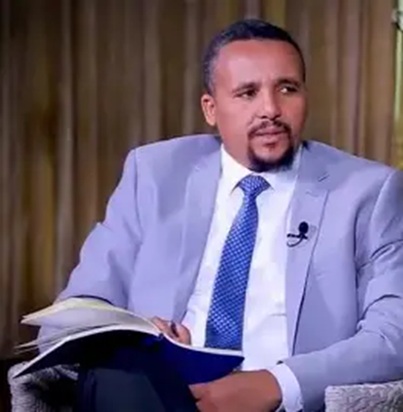
Jawar Mohamed, the self-styled voice of the Qeero movement, has once again stepped into dangerous territory, this time with rhetoric that exposes not strategy, but delusion.
In remarks that have stirred outrage, Jawar suggested that he and Ethiopia’s Prime Minister, Abiy Ahmed, have come to accept that ruling Ethiopia in its current form is untenable. Their alleged alternative? The creation of an Oromo state—one that would carve out the most resource-rich Somali-inhabited territories currently under Ethiopian control and push outward toward Somalia’s northern coastline.
It is a claim as reckless as it is revealing. Because even within his own narrative lies an admission: such ambitions are not achievable. Somali land, he concedes, cannot simply be taken. And yet, the fantasy persists—echoing a long-standing pattern of provocative statements from Oromo political figures directed at Somalia and its people.
Let’s be clear: Jawar Mohamed is not a state official. He holds no government office, commands no army, and carries no institutional authority. His rise came through activism during the Oromo protests of 2014–2016, where he skillfully mobilized youth networks and media platforms to help transform demonstrations into a political upheaval that contributed to the fall of Prime Minister Hailemariam Desalegn.
That history is real. But it does not make him a policymaker. It certainly does not grant him the authority to redraw maps or speak casually about Somali territory. Yet Jawar speaks as if he does.
His alignment with figures like Lemma Megersa—whose tenure in Oromia was marked by accusations of incursions into Somali regions—only deepens concern about the political mindset behind such rhetoric. What is being presented as analysis increasingly looks like a continuation of expansionist thinking dressed in political language.
And then there is the arrogance. Jawar’s comments about shifting control of Baidoa from Ethiopia to Egypt and Turkey, or the supposed decline of Ethiopian and Emirati influence in Puntland, are delivered with the confidence of a man detached from both facts and consequences. The question is unavoidable: on what authority does he speak?
Somalia is not a province of Ethiopia. Puntland is not a permanent outpost for foreign powers. And the idea that external actors can simply trade influence over Somali territory reflects a fundamental misunderstanding of both Somali sovereignty and Somali memory.
There is also a recurring attempt—by Jawar and others—to weaponize numbers. The constant refrain of “we are 130 million” is meant to intimidate. It does not. Somalia has endured far greater threats than demographic boasts. Numbers alone do not determine legitimacy, nor do they rewrite history.
History matters
In 1962, a newly independent Somalia offered refuge to Oromo individuals fleeing repression under Emperor Haile Selassie. For years, Somalia provided support—training, protection, even medical care. That support played a role, however modest or significant, in shaping the political trajectory that figures like Jawar now benefit from.
Today, that history is not just forgotten—it is repaid with rhetoric that borders on hostility. The latest chapter in this pattern is Ethiopia’s increasingly transparent pursuit of maritime access through agreements such as the one involving Somaliland. This is not, as some attempt to frame it, a strategic miscalculation. It is ambition—plain and simple—driven by a perception of power that may prove far more fragile than its advocates believe.
Somalia’s position, however, remains unchanged. It is not a country that yields to intimidation. It is not a nation that can be negotiated away in political soundbites. And it is certainly not territory to be discussed as if it were available for redistribution.
Jawar Mohamed’s statements do not signal strength. They reveal a mindset untethered from political reality—one that confuses rhetoric for power and ambition for capability. Because in the end, there is a line that cannot be crossed. And Somali land is that line.
By Axmed-Yaasiin Maxamed Sooyaan
Email: alle_yaqaan99 @ yahoo.co.uk