
By Eng. Ahmed Moalin – Waharey
History shows that many military revolutions begin with great enthusiasm, ambition, and public support. During their first five to ten years, revolutionary governments often focused on visible achievements such as constructing large buildings, factories, highways, dams, and public institutions. These projects are usually presented as “quick impact plans” designed to demonstrate rapid progress and strengthen public confidence in the new leadership. However, the problem with many of these projects is that they are often implemented without sufficient long-term planning, sustainability strategies, or meaningful community participation. When local communities are excluded from decision-making and project ownership, the result is frequently a lack of responsibility for maintaining public assets. Over time, infrastructure may deteriorate, become abandoned, or be easily looted (bililiqo) during periods of political instability. The same challenge can be observed in agricultural development. In many districts, local farmers produce enough food to satisfy the needs of their existing markets.
Revolutionary governments sometimes attempt to increase production by distributing agricultural equipment and resources free of charge while encouraging many new people to enter farming. While this may initially appear beneficial, problems emerge when production expands much faster than market demand. If the number of farmers increases tenfold without creating new markets, improving transportation networks, expanding exports, or developing food-processing industries, agricultural prices may collapse. Established farmers who previously earned a living from their production may find farming no longer profitable and eventually abandon their fields. Instead of strengthening agriculture, poorly planned interventions can unintentionally weaken the sector. Another common feature of military revolutions is their preference for centralized decision making. Long-term political reforms are often viewed with suspicion because such reforms can gradually reduce the concentration of power in the central government. Genuine decentralization would allow districts and municipalities to elect their own councils, manage local resources, and hold local leaders accountable.
While decentralization can improve governance and public participation, it also limits the ability of central authorities to control every aspect of political life. For this reason, many revolutionary governments focus heavily on physical infrastructure while giving less attention to building durable democratic institutions. Roads, factories, and public buildings are important, but strong institutions, accountable governance, and local participation are equally necessary for sustainable national development.
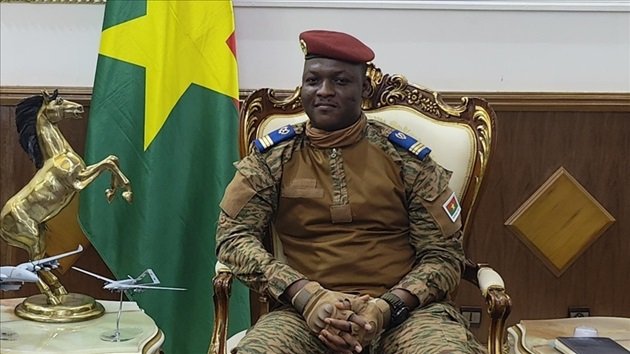
The case of Ibrahim Traoré presents an important question for Burkina Faso and for many countries led by revolutionary movements. Today, many people admire his efforts to strengthen national sovereignty and invest in development. Yet the true test of any revolution does not occur during its years of military mobilization. It comes later. When military uniforms are eventually replaced by black suits, when universities produce tens of thousands of graduates, and when the excitement of revolution gives way to the routine demands of governance, the real challenge begins.
A growing, educated population will demand transparency, accountability, economic opportunities, and a greater voice in public affairs. The future success of Ibrahim Traoré’s legacy will therefore depend not only on the infrastructure he builds, but also on whether he establishes good governance, strong institutions, and meaningful decentralization of government powers. Without these foundations, even impressive achievements may prove temporary. With them, however, a revolution can evolve into a stable and prosperous political order capable of serving future generations.
Conclusion:
Although I have deep respect for African patriotism and strongly oppose the continued exploitation of the Sahel’s gold, uranium, and other natural resources by foreign interests, I still find it difficult to give unconditional support to the military revolutions that have emerged in Mali, Niger, and Burkina Faso. My hesitation does not come from opposition to their goals of sovereignty, independence, and national dignity. Rather, it comes from the lessons of history, which show that military governments often struggle to transform revolutionary energy into lasting institutions.
Political independence alone is not enough; it must be accompanied by the development of strong institutions, accountable governance, and an educated citizenry capable of safeguarding the nation’s future. The one expectation I have of the leaders of these military-led governments is that they use their limited time in power to accelerate the intellectual and civic development of their people. They should invest heavily in education, universities, research centers, technical training, and the cultivation of critical thinking. Their greatest legacy should not be the number of military victories they achieve or the monuments they build, but the number and quality of the intellectuals, professionals, entrepreneurs, and public servants they produce. These educated citizens should become the future leaders of their countries, capable of building stable institutions, protecting national sovereignty, and creating free, competitive, and trustworthy markets for their nations’ resources.
If the revolutions of Mali, Niger, and Burkina Faso succeed in producing such a generation, they may ultimately achieve something far greater than political change: they may lay the foundations for genuine and lasting national development.
Eng. Ahmed Moalin – Waharey
Email: ahmed.moalin@gmail.com