
By Anwar Maxamed Diiriye
“A great leader is not remembered for the power they held, but for the principles they refused to abandon.” — Anonymous
The unfolding constitutional crisis in Somalia once again exposes the deep fragility of national governance and the growing erosion of trust between the federal government and the federal member states. What we are witnessing is not merely a political disagreement, but a reflection of weakened institutions, persistent corruption, and the long-term consequences of repeated leadership failures.
Too often, segments of Somalia’s political elite abandon their fundamental duty as public servants. Instead of strengthening trusted and well-established public institutions, they resort to power consolidation, constitutional manipulation, and practices shaped by the legacy of civil war politics. This pattern has become painfully predictable with every electoral cycle bringing renewed tension, legal overreach, and deliberate distortions of the constitutional framework. Each administration, rather than respecting institutional limits, attempts to expand its authority beyond legality, creating crises that are entirely man-made and avoidable.
What makes the current moment particularly alarming is not just the existence of a constitutional crisis, but the normalization of governance through illegality. Leaders increasingly treat the constitution as an obstacle to navigate, rather than a foundation to uphold. Corruption both financial and political has become embedded within the system, weakening accountability and eroding public confidence in the state.
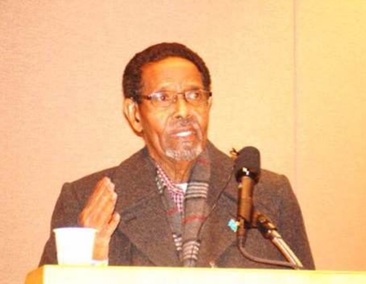
In reflecting on these failures, it is instructive to revisit the leadership philosophy of Abdirizak Haji Hussein, Somalia’s second prime minister (1964–1967). His approach to governance, particularly during periods of national uncertainty offers a disciplined and principled framework that remains deeply relevant to Somalia’s current disorder.
The Constitution as a Moral Covenant
For Abdirizak, the constitution was never a flexible political tool to be stretched or reinterpreted for convenience. It was a moral covenant between the state and its people. Today’s constitutional tensions, marked by disputes over power-sharing, contested authority, and selective interpretation of legal provisions would likely concern him deeply. He would argue that the crisis is not simply rooted in legal ambiguity, but in political dishonesty.
When leaders deliberately reinterpret or bypass the constitution to serve their own interests, institutions lose credibility and governance becomes unstable. In his view, no short-term political gain can justify weakening the constitutional order. Rather than allowing politicians to act as both players and referees, he would insist on strengthening judicial independence and ensuring that constitutional disputes are resolved by impartial legal institutions, not by those seeking to benefit from them.
The Personalization of Power
One of the defining characteristics of Abdirizak’s leadership was his rejection of power as a personal entitlement. He understood that public office is temporary and conditional upon trust. In contrast, Somalia’s current political environment is heavily shaped by the personalization of authority.
Political competition is no longer about policy or governance, it has become a struggle for control, influence, and survival within the system. Institutions are weakened because they are treated as extensions of individuals rather than independent structures.
Abdirizak would likely see this as a dangerous regression. When leaders place themselves above the law, the law itself loses meaning. His voluntary transfer of power in 1967, following the example set by the premiers before him remains a powerful example: leadership is not measured by how long one holds power, but by the integrity with which one exercises, and relinquishes it.
Corruption and the Collapse of Legitimacy
If there is one issue that would deeply alarm Abdirizak, it is the scale and normalization of corruption in today’s Somalia. During his tenure, accountability was not optional. Today, however, corruption is no longer hidden, it is systemic. Public resources are frequently misused, institutions are compromised, and political decisions are often influenced by personal or factional gain rather than national interest.
Abdirizak would interpret this not as a governance flaw, but as a fundamental threat to state legitimacy. Corruption is not merely financial misconduct; it is a betrayal of the Somali people. It destroys trust, weakens institutions, and diverts resources away from essential services. More critically, it undermines the Constitution itself, because a corrupt system cannot enforce laws fairly or consistently.
He would likely call for independent anti-corruption institutions with real enforcement power, transparent investigations into the misuse of public funds, strong oversight mechanisms free from political interference, and a cultural shift in which public service is defined by integrity rather than personal gain. Without accountability, even the strongest institutional framework becomes meaningless.
Federalism and the Question of Unity
Somalia’s federal system was designed to balance power and promote inclusion. However, in practice, it has often become a source of tension and division. Disputes between the federal government and member states over authority, resources, and political control continue to destabilize governance. These conflicts are often intensified by mistrust and political maneuvering rather than resolved through dialogue.
Abdirizak would not reject federalism itself. Instead, he would critique how it is being practiced. To him, federalism should be a mechanism for cooperation, not competition. He would likely argue that the current tensions are not structural failures, but leadership failures driven by unwillingness to compromise and prioritize national unity.
He would urge all sides to return to dialogue, mutual respect, and shared responsibility recognizing that the strength of Somalia depends on collaboration, not confrontation.
Leadership as Ethical Responsibility
Perhaps the most striking difference between Abdirizak’s era and today lies in the meaning of leadership. For him, leadership was an ethical duty grounded in humility, discipline, and accountability. Today, however, leadership is too often equated with the accumulation of power, the misuse of public funds, political survival, and the pursuit of control.
In moments of constitutional crisis, Abdirizak would likely advocate for restraint. Rather than exploiting legal ambiguities or escalating conflicts, leaders should act to preserve institutional integrity. He would remind them that power is temporary, that institutions must outlast individuals, and that governance must serve the people, not the elite.
A Crisis of Political Culture
If Abdirizak were to assess Somalia today, he would likely conclude that the constitutional crisis is not merely legal; it is cultural. The real problem lies in the gap between what the constitution represents and how leaders choose to behave.
Somalia does not lack laws. It lacks consistent respect for those laws. The repeated manipulation of constitutional provisions, the normalization of corruption, and the erosion of accountability all point to a deeper issue: a governance culture that prioritizes power over principle.
Conclusion
Abdirizak Haji Hussein would likely view Somalia’s current constitutional crisis as a test of leadership, not just legality. His message would be clear: uphold the constitution without compromise, strengthen institutions instead of individuals, confront corruption as a national emergency, and prioritize unity over political gain.
In a political environment defined by instability and short-term thinking, his legacy offers something rare: disciplined, principled leadership rooted in integrity; an imperative and homegrown political philosophy that current and future leaders must learn from.
It is a reminder that nations do not fail for lack of systems, but because those entrusted to uphold them choose to undermine them; an unfortunate reality shaping our current leadership dilemma at every level.
Lament, My Nation, Lament.
Lament not in defeat but in truth
for the years stolen by those who mistook power for purpose
for a constitution bent until it broke
for institutions hollowed until only names remained
Lament for what was lost
and for what was knowingly destroyed
Lament until memory returns
until every city echoes a shared refusal to forget
Because a nation that forgets its wounds
will keep reopening them
Then rise
Rise with clarity
with discipline
with a memory that cannot be manipulated
To the leaders of today
this lament is your judgment
You were entrusted with a nation not a throne
Power is not permanence it is a test
and history will record how you answered
To the leaders of tomorrow
do not inherit these failures
Build institutions that outlive you
Protect laws that restrain you
Serve people who expect integrity not excuses
Lament, my Nation, Lament
but do not remain in lament
Rise so firmly in integrity
that no future generation of yours
will ever need to mourn like this again!
Anwar Maxamed Diiriye
Email: anwaer@usfamily.net