
By Abdirahman Yusuf (Soome)
1. Introduction
Livestock production is the cornerstone of Somalia’s economy and social structure forming the backbone of rural livelihoods and national export earnings. The livestock sector contributes more than 70% of the country’s export revenue and supports approximately 60–65% of the population, either directly through pastoralism and agro-pastoralism or indirectly through trade, transport and related services. Beyond its economic significance livestock plays a central role in Somali culture, functioning as a primary store of wealth, a source of social status and a safety net during times of crisis. In pastoral communities, animals are often described as a mobile bank account, providing both daily sustenance and long-term financial security.
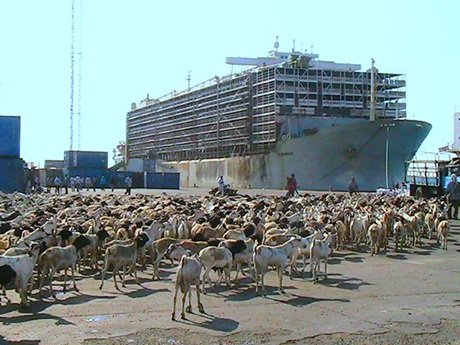
Historically, Somalia has been one of the leading exporters of livestock in the Horn of Africa, supplying millions of goats, sheep, cattle and camels annually to markets in the Gulf Cooperation Council (GCC) countries, particularly during peak demand periods such as the Hajj season. This export-oriented system has shaped production patterns, market structures and national economic planning. The sector’s heavy dependence on livestock exports has also created structural vulnerabilities, particularly in the face of environmental shocks and fluctuating international market conditions.
Despite its resilience over decades, the livestock sector remains highly sensitive to climate variability. Somalia’s predominantly arid and semi-arid climate makes livestock production almost entirely dependent on the availability of seasonal rainfall. The success of pastoral systems is closely tied to the performance of the Gu and Deyr rainy seasons, which determine pasture availability, water access and overall herd productivity. Any disruption in these rainfall patterns has immediate and far-reaching consequences for livestock health, reproduction, and market readiness.
In recent years the increasing frequency and intensity of climate-related shocks particularly prolonged droughts have exposed the limits of traditional pastoral coping mechanisms. The 2026 livestock export deficit emerges within this context of escalating climate stress, following multiple consecutive seasons of below average rainfall. These conditions have led to widespread pasture depletion, water scarcity, declining animal body conditions and increased mortality rates, all of which directly undermine export capacity.
This article is to provide a critical analysis of the current structural collapse within the Somali livestock sector, serving as an urgent call to understand the transition from the robust 42.3% growth witnessed in 2024 to the catastrophic export deficit of May 2026.
2. The Four-Season Drought Cycle and Its Impact on Somalia’s Livestock System
The livestock export crisis of 2026 did not happen overnight. It developed gradually shaped by a sequence of failed rainy seasons that slowly weakened the entire pastoral system. What may have seemed like normal seasonal variability at first eventually turned into a full-scale environmental breakdown.
The first warning sign came with the failure of the Deyr 2024 rains (October–December). At the time, many communities treated it as a short-term irregularity something that pastoralists in Somalia have learned to live with. However, the impact was deeper than expected. Pasture regeneration was limited and many water sources including berkads and shallow wells, were not fully replenished. This meant that herders entered the next dry season already under pressure with fewer resources to rely on.
Hopes were then placed on the Gu 2025 rains (April–June), which are normally the most important for livestock production. A good Gu season can restore pasture, refill rivers and stabilize pastoral livelihoods. Unfortunately, the rains that year were both insufficient and unreliable. In some areas they arrived late, in others they stopped too early and, in many places, they were simply too weak to make a real difference. As a result, pasture did not recover properly and water shortages continued. By mid-2025, it was clear that the situation was becoming more serious.
The real turning point came with the failure of the Deyr 2025 rains. This season was expected to help stabilize conditions but instead it failed across most parts of the country affecting nearly 80% of the territory. Pasture conditions collapsed and fodder production dropped to extremely low levels. Agro-pastoral communities were also affected as crop production declined and crop residues normally used as animal feed became scarce.
At the same time, water availability reached critical levels. Key rivers such as the Shabelle and Juba recorded very low flows, limiting irrigation and making fodder production even more difficult. Many pastoralists were forced to rely on water trucking, which is expensive and not sustainable over long periods. This sharply increased the cost of keeping livestock alive.
These conditions carried over into the Jilaal dry season of early 2026, which turned out to be longer and harsher than usual. By this point, the environment had very little left to offer. Grazing land was exhausted, water sources had dried up, and animals had to travel longer distances in search of survival. Many did not make it. Livestock deaths increased significantly, especially among weaker animals.
For those animals that survived, their condition deteriorated badly. They lost weight, became more vulnerable to disease, and no longer met the standards required for export markets. This created a difficult situation for pastoralists. With limited resources and rising costs, many were forced to sell their animals early often at very low prices. These distress sales disrupted the normal livestock cycle, where animals are usually prepared for high-demand periods such as the Hajj season. Instead of selling strong, healthy animals at good prices, herders were selling weak animals just to survive.
The 2026 livestock export deficit was not caused by a single failed season, but by a chain of events that built on each other. It shows how closely linked climate, environment and livelihoods are in Somalia and how quickly things can change when that balance is disrupted.
3. Quantitative Impact on Livestock Trade Volumes and Value in Somalia
The 2026 livestock export deficit is reflected not only in the sharp decline in the number of animals exported, but also in the reduced market value of those that reached international markets. In economic terms, the crisis has simultaneously affected both trade volumes and price levels, generating a compounded loss across the entire livestock value chain. Producers, traders, transporters and exporters have all been impacted while the broader national economy has experienced a contraction in one of its primary sources of foreign exchange. This dual shock underscores the scale of the disruption, as reduced supply alone would have been damaging, but when combined with falling prices, the overall economic effect becomes significantly more severe.
Quantitative estimates illustrate the severity of the decline. Exports of sheep and goats fell from approximately 5.9 million head in 2024 to about 3.8 million in 2026, representing a drop of 35.6%, while cattle exports declined by 36.4% and camels by 19.8% over the same period. At the same time, livestock prices also deteriorated significantly; for example, the average price of an export-quality goat decreased from around $55 in 2024 to $32 by early 2026, a reduction of nearly 27%. The combined effect of declining volumes and falling prices has led to a substantial reduction in export earnings. Consequently, government revenues particularly those derived from export taxes and port-related activities have also declined, placing additional fiscal pressure on both federal and regional administrations.
4. Hajj Season Livestock Demand Dynamics in Gulf Markets
The Hajj season represents the most critical period in the regional livestock trade calendar, during which demand for UD-HA (primarily sheep, goats and cattle) increases sharply. Market reports from Gulf importers indicate that livestock demand during this period can rise by 40–60% compared to non-Hajj months, driven by religious obligations. Livestock trade must meet strict veterinary, weight standards, which further intensifies competition among exporting countries such as Somalia.
For Somalia, this seasonal peak traditionally generates a significant share of annual livestock export revenue. Livestock accounts for an estimated 80–90% of Somalia’s agricultural export earnings, with the Hajj season contributing a disproportionate share of foreign exchange inflows. In a normal production year, millions of head of livestock are mobilized from pastoral regions such as Puntland, Galmudug, Hir-shabelle, North east state and Somali regional state of Ethiopia, moving through key export corridors toward ports including Bosaso and Berbera, before being shipped to Saudi Arabia and other Gulf states.
However, in 2026, this demand-driven trade cycle experienced a severe structural breakdown due to compounding shocks across the supply chain. Prolonged and repeated drought episodes across multiple seasons significantly reduced pasture availability and water access, leading to high livestock mortality rates and weakened herd health. Field-level assessments in drought-affected regions indicated a noticeable decline in average animal body condition scores, resulting in a reduced proportion of export-ready livestock that met Gulf market specifications. In some pastoral corridors livestock availability reportedly declined by 30–50% compared to baseline years, directly constraining supply during the peak Hajj trading window.
Overall, the 2026 Hajj livestock trade cycle underscores a deeper structural vulnerability in Somalia’s export economy. The intersection of climate-induced supply shocks, weak logistical infrastructure and rigid seasonal demand patterns reveals the fragility of the livestock value chain. This situation highlights the urgent need for investment in drought resilience systems, improved transport infrastructure, veterinary services and export coordination mechanisms to stabilize Somalia’s participation in high-value seasonal Gulf markets.
Conclusion
The 2026 livestock export deficit is about more than just forecast, it represents a heartbreaking struggle for the families whose entire lives and savings are tied to their Livestock. This crisis is a clear warning that Somalia’s main economic pillar is struggling to cope with the harsh climate shocks hitting the Horn of Africa. Only two years ago, in 2024, the sector showed incredible strength with a 42.3% growth rate and the export of 6.4 million animals. However, four failed rainy seasons in a row have proven that relying only on the health of livestock is no longer enough to keep the economy stable.
For a local nomadic family, this crisis feels like being trapped. They are being squeezed by a scissors effect. In some areas, the price of a goat has dropped by 28%, turning a difficult season into a national emergency that has already forced nearly thousands of people to leave their homes.
To fix this, we have to stop just reacting to disasters and start building a system that lasts. One bright spot is the chilled meat industry, which recently grew to a value of $13.7 million. This shows that processing meat locally, rather than just shipping live animals, is a smart way to keep income steady even when the weather is at its worst. This change is the only way to make sure the nation’s wealth isn’t tied entirely to when it rains.
The future of Somalia’s livestock depends on a plan that puts people first. We need to work together to build better water systems, grow reliable animal feed and sell meat products year-round, not just during special seasons. By fixing the problems that caused the 2026 deficit now, Somalia can protect its most important industry and make sure that its hardworking herding communities can do more than just survive they can truly thrive.
Abdirahman Yusuf (Soome)
Email: cycsoome@gmail.com
———-
References
- Central Bank of Somalia. (2026). Quarterly economic review: 2025 Q4. https://centralbank.gov.so/publications/
- FAO GIEWS. (2025, November 24). Special alert No. 353: The Federal Republic of Somalia. Food and Agriculture Organization of the United Nations. https://openknowledge.fao.org/bitstreams/adad6ba1-2342-439e-8bf7-4776ee669582/download
- FAO SWALIM. (2026). Somalia Gu 2026 climate outlook. https://faoswalim.org/resources/site_files/Somalia_Gu_Climate_Outlook_7_Feb_2026%20.pdf
- Feed Business Middle East & Africa. (2025, November 3). Somalia eyes US$1B in livestock exports by end of 2025. https://www.feedbusinessmea.com/2025/11/03/somalia-eyes-us1b-in-livestock-exports-by-end-of-2025/