

By Abdelkarim A Haji Hassan
Somalia’s crisis is not accidental, it is engineered. For nearly 35 years, the country has been consumed by war, conflict, and political instability while a narrow political elite endlessly circulates between power and opposition. This recycled leadership has delivered neither reform nor renewal, only the entrenchment of personal interests, locking Somalia into a self-sustaining cycle of failure.
Thirteen years have passed since Somalia emerged from the Transitional Federal Government (TFG) framework in 2012, a moment intended to mark the beginning of institutional rebuilding and national recovery. Yet nearly 70 percent of this post-transition period has unfolded under the leadership of President Hassan Sheikh Mohamud, who has governed for nine (9) of those thirteen (13) years across two terms, first from 2012 to 2017 and again since 2022. As his current mandate approaches its scheduled end in May 2026, uncertainty persists over whether the cycle of political manipulation and power retention will once again eclipse constitutional order. The persistent political paralysis, insecurity, economic fragility, and diplomatic failures confronting Somalia today are therefore inseparable from President Hassan’s record in office.
The country’s most valuable asset, its human capital has been sacrificed at a moment when effective leadership is most urgently needed. Rather than consolidating governance around national interest, competence and accountability, Hassan Sheikh’s administration has entrenched a system driven by family and clan favoritism, nepotism, and cronyism. Meritocracy, the foundation of any functioning state, has been systematically undermined. Somalia’s most capable professionals have been sidelined, while loyalty and mediocrity have been elevated to positions of authority.
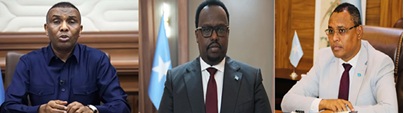
This decay is unmistakable in the structure and operation of the executive branch. Government portfolios are manufactured and dismantled arbitrarily without parliamentary legislation, cabinet advise or any evidence-based policy justification—driven purely by political expediency and personal gain. The creation of the post of Second Deputy Prime Minister (SDPM) is a glaring example. The office is held by a former Minister of Commerce and parliamentarian who openly admitted that his participation in government was intended to secure jobs and services solely for his immediate family—an extraordinary declaration that lays bare the normalization of corruption and nepotism at the highest levels of the state. The position of the SDPM itself was not born of institutional necessity or governance reform, but of a transactional political bargain designed to satisfy specific factional interests.
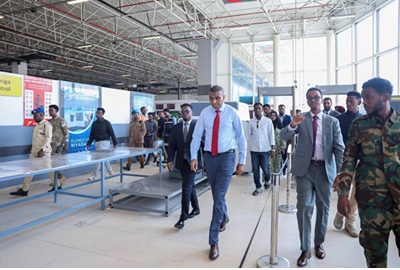
Moreover, while creating such an overburdened, largely symbolic and cosmetic executive position, both the Prime Minister and the Deputy Prime Minister have been stripped of meaningful authority, operating without clearly defined portfolios as power has been aggressively centralized in the hands of the President and his family inner circle. This concentration of authority has hollowed out executive governance, reducing the Prime Minister’s office to a performative shell—at times descending into the inspection of Mogadishu International Airport bathrooms and luggage areas while the country remains mired in deep political paralysis, insecurity, economic collapse, drought and humanitarian distress.
Government ministerial directorates are frequently shuffled between ministries for the sole purpose of controlling their financial resources. A striking example is Climate Finance, which was moved from the Ministry of Environment and Climate Change to the Office of the President, placing the control of funds and money in the hands of President Hassan Sheikh’s political appointees rather than allowing to serve the intended institutional and public purpose.
The absence of clarity, competence, and authority has produced a broader culture of dysfunction across government. Somalia’s repeated failures to resolve political disputes, stabilize the security environment, or build resilient institutions are not anomalies—they are the predictable outcomes of a governance system that prizes loyalty over capability. Nowhere is this more evident than in Somalia’s foreign policy’s incoherent and engagements with the international community.
On countless occasions, Somali ministerial representatives have arrived at international forums visibly unprepared, uninformed, and incapable of engaging with the substance of the conference and discussions. Rather than advancing Somalia’s national interests, their presence is often reduced to hollow photo opportunities—performances that embarrass both the officials themselves and the country they claim to represent. Many ministers, plainly out of their depth and unsure of their own mandates, retreat into crude political theatrics and propaganda. A significant share of their time is spent attacking critics of President Hassan on social media, instead of crafting policy, building institutions, delivering services, or credibly defending Somalia’s interests on the global stage.
Each foreign relations crisis lays bare Somalia’s acute shortage of seasoned diplomats and strategic thinkers—a direct consequence of President Hassan’s entrenched nepotism and cronyism. Decisions that require expertise, consultation, and strategic foresight are instead reduced to missteps that deepen Somalia’s isolation and erode its sovereignty. This systemic failure is reflected in the appointment of cabinet officials and ambassadors with little or no relevant experience. Since 2022, the Ministry of Foreign Affairs has cycled through three ministers, none possessing meaningful diplomatic experience, producing persistent inconsistency, incoherence, and chronic underperformance in Somalia’s foreign policy failures for which by design the concentration of authority in Villa Somalia leaves the president ultimately accountable.
Many argue that Somalia could have avoided decades of chaos if decisive leadership had prevailed in 1990. The “Manifesto” group—a coalition of elder statesmen, politicians, intellectuals, and religious leaders—urged the late Siyad Barre to step down to prevent total collapse, as it was clear he had lost control and the government had disintegrated. Barre refused, and the country plunged into prolonged civil war and instability. Today, Somalia faces a disturbingly similar scenario: President Hassan Sheikh confronts the same crises yet remains unwilling to negotiate or compromise, pursuing only his own agenda while the nation teeters on the edge.
This political behavior has long frustrated both Somalis and Somalia’s international partners. Michael Keating, former Special Representative of the UN Secretary-General for Somalia and Head of the United Nations Assistance Mission in Somalia (UNSOM) from 2016 to 2018, has openly reflected on the chronic lack of compromise among Somali leaders. In War and Peace in Somalia: National Grievances, Local Conflict, and Al-Shabaab, which he co-authored, Keating highlights a persistent contradiction in Somali politics: leaders champion dialogue, compromise, federalism and power-sharing when they are outside the executive power, only to adopt rigid, uncompromising, and often authoritarian practices once they take control of Villa Somalia. The authors argue that Somalia’s prolonged conflict can only be resolved through a genuine commitment by Somali leaders to address their differences—no amount of international support, they stress, can substitute for sincere political agreement among Somalis themselves.
Somalia’s crisis is no longer transitional; it is the product of a chronic failure to cultivate capable human capital and the absence of leadership anchored in the rule of law. At its core lies a deliberate rejection of merit-based governance in favor of patronage, propaganda, and personal loyalty. Until national interest prevails, the rule of law is enforced without exception, and competence and accountability are restored at the center of power, Somalia will remain locked in a self-inflicted and enduring cycle of instability—no matter how often the transition is declared over.
Abdelkarim A Haji Hassan
Email: abdelkarimhass@gmail.com