
By Abdikarim Haji Abdi Buh
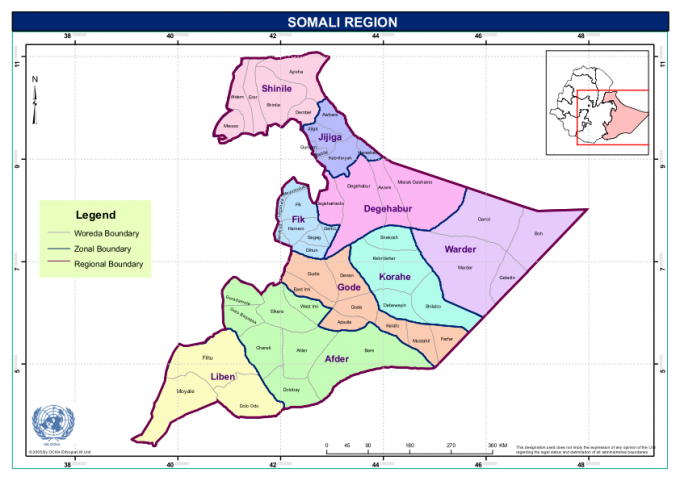
For much of Ethiopia’s modern history, the Somali Regional State (SRS) was treated as a peripheral security zone rather than a full political stakeholder within the federation. Decisions affecting the region were routinely made without consultation, and governance was imposed through coercive structures rather than negotiated authority. This approach produced neither stability nor development—only fear, mistrust, and chronic underperformance.¹
That paradigm shifted fundamentally after President Mustafa Mohammed Omar assumed office in August 2018.²
What distinguishes the post-2018 transformation of the Somali region is not only improved security or increased investment, but the method of governance itself: a deliberate move away from command-and-control politics toward consultation, dialogue, and consent-based leadership.
Consultation as a Governing Philosophy
From the outset, President Mustafa framed governance as a collective enterprise rather than an executive decree. His administration prioritized inclusive consultation with:
1) Clan elders and traditional leaders
2) Youth and women’s groups
3) Religious leaders
4) Civil society organizations
5) Regional professionals and the diaspora
6) Federal institutions and neighboring regional states
This approach rebuilt trust between citizens and the state—something security operations alone had failed to achieve for decades.³ Policies were debated publicly, grievances were aired rather than suppressed, and political participation became normalized instead of criminalized.
As a result, legitimacy replaced fear as the foundation of authority.
Turning the Tables on Insecurity
The consultative approach had a direct impact on security outcomes. By engaging communities as partners rather than suspects, the administration reduced tensions that had previously fueled conflict. Security institutions were reoriented toward civilian protection and accountability, while political disagreements were increasingly resolved through dialogue rather than force.⁴
Independent assessments following 2018 noted a sharp reduction in politically motivated violence, arbitrary detentions, and population displacement in the Somali region.⁵ Freedom of movement improved, inter-communal conflicts declined, and public spaces reopened for commerce, civic engagement, and political expression.
Stability, in this context, was not enforced—it was co-produced.
From Marginalized Periphery to National Convening Hub
Perhaps the most striking indicator of this transformation is symbolic as much as practical: Ethiopia’s most important inter-regional and federal gatherings are now routinely held in Jigjiga, the capital of the Somali Regional State.
This would have been inconceivable before 2018.
For decades, the Somali region was avoided as a venue for national meetings due to security concerns and political sensitivities. ⁶ Today, Jigjiga hosts:
a) Meetings of regional state presidents
b) Federal–regional coordination forums
c) National consultations on development and reform
d) High-level investment and infrastructure summits
The choice of Jigjiga reflects increased confidence in the region’s security environment and governance capacity, as well as its reintegration into Ethiopia’s federal political mainstream.⁷
Development Enabled by Dialogue
Consultation-based governance also unlocked development. Evidence from fragile and conflict-affected settings shows that inclusive governance and local buy-in are key determinants of successful investment outcomes.⁸
Over the past seven years, this enabling environment has translated into measurable progress across the Somali region:
a) Agricultural production increased from approximately 8 million quintals to over 30 million quintals, with further growth targets set⁹
b) The number of hospitals increased from nine to 30, significantly expanding access to basic healthcare¹⁰
c) Approximately 20 urban centers, including Godi, gained access to clean water¹¹
d) More than 1,900 kilometers of asphalt roads were constructed, improving regional connectivity¹²
e) Over 64 districts and villages gained access to 24-hour electricity¹³
The launch of large-scale fertilizer and natural gas projects in Godi reflects increased investor confidence and federal-regional alignment. Such investments would have been highly unlikely under the pre-2018 security-dominated governance model.¹⁴
Governing by Consent in a Federal System
In a multi-ethnic federal system, durable unity depends on consent rather than coercion. President Mustafa’s administration repositioned the Somali region as a constructive federal partner, contributing to improved inter-regional relations and reduced political friction.¹⁵
This shift explains why Jigjiga is increasingly viewed by federal institutions and regional leaders as a neutral and credible venue for national dialogue.
Conclusion: Lessons for Development Partners
The transformation of Ethiopia’s Somali Regional State was not accidental, nor achieved through force. It resulted from deliberate governance reforms emphasizing consultation, accountability, and inclusion. For development partners and IFIs, the Somali region offers a case study in how governance reform can precede—and enable—security, investment, and development outcomes. When communities are consulted, stability follows. When dignity is restored, development becomes sustainable.
What was once Ethiopia’s most insecure region has become one of its most trusted convening grounds—a testament to the power of consent-based leadership in fragile contexts.
Abdikarim Haji Abdi Buh
Email: abdikarimbuh@yahoo.com