
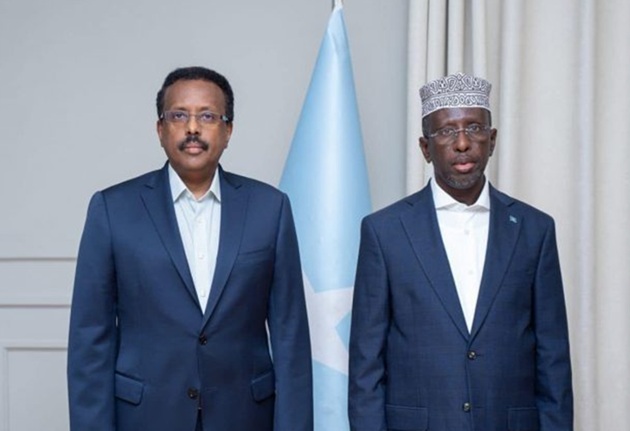
Mogadishu (WDN) — Somalia’s former presidents Mohamed Abdullahi Mohamed Farmaajo and Sharif Sheikh Ahmed have strongly condemned the forced displacement of residents in Mogadishu’s Tookiyo neighborhood, describing the destruction of homes and removal of families as a deeply troubling abuse of state power.
Their statements came after government security forces reportedly carried out an early-morning operation in Tookiyo, Yaqshiid district, forcing residents from their homes and demolishing properties amid a long-running dispute over land ownership.
Farmaajo, in a statement issued Sunday evening, described the continued displacement of residents and what he called the unchecked seizure of land in the capital as a serious national tragedy. He condemned the reported demolition of homes occupied by children, women, elderly people and vulnerable families, saying such actions were incompatible with basic human dignity and compassion.
Farmaajo called on President Hassan Sheikh Mohamud to immediately halt what he described as the forced displacement of civilians and the misuse of government institutions and security forces against citizens. “There can be no justification for forcibly removing Somali citizens from their homes in the darkness of night and destroying their property in front of them while using national forces,” Farmaajo said.
He expressed solidarity with families whose homes were destroyed and residents who were displaced, saying their rights and dignity must be protected.
Sharif Sheikh Ahmed also issued a strongly worded statement, expressing deep sadness over the operation and accusing the government of using national security forces in a manner that harmed the very citizens they were established to protect.
He said the operation had reportedly displaced hundreds of families and resulted in the destruction or loss of civilian property. “The National Army was established to protect the dignity and rights of citizens, not to displace them or seize their property,” Sharif said.
He warned that using security forces against civilians could severely damage public confidence in state institutions and deepen fear among families living in the capital. Sharif also said reports of deaths, injuries and property losses had emerged from the operation, although he did not provide specific figures or independent evidence to substantiate the extent of the casualties.
A Human Cost Beyond the Land Dispute
At the center of the controversy is a dispute over land that has become part of a much wider and increasingly painful debate over property rights and displacement in Mogadishu.
Government authorities have previously argued that some disputed areas constitute public land that must be recovered and protected in the public interest. Residents, however, maintain that they have longstanding claims to the properties and question the legality and manner of their removal.
The former presidents argue that regardless of the government’s position on land ownership, any seizure or demolition must follow clear legal procedures, due process and independent judicial review.
The events in Tookiyo have therefore raised concerns that what begins as a land dispute can quickly become a humanitarian crisis when heavily armed forces are deployed against families.
For residents who have lost their homes, the issue is no longer simply about land titles. It is about shelter, security, dignity and the fear of becoming displaced in their own city.
The confrontation comes amid growing tensions over land administration, security and governance in Mogadishu. Critics of the government argue that forced evictions risk creating new internally displaced families and deepening public resentment toward state institutions. Such grievances could also have wider security consequences in a country where militant groups have historically exploited public anger and distrust of government authorities.
Sharif urged residents of Mogadishu to remain united and defend their rights, while emphasizing the need for accountability and respect for the law. At the same time, establishing the full facts remains essential. The government has yet to provide a comprehensive public account of the operation, including its legal basis, the number of families affected, the extent of property destruction and any casualties.
What happened in Tookiyo is therefore more than a dispute over land. It is a painful test of whether Somalia’s institutions can resolve property conflicts through law and justice rather than force—and whether the state can protect citizens from becoming displaced by the very authorities entrusted with protecting them.
WardheerNews