
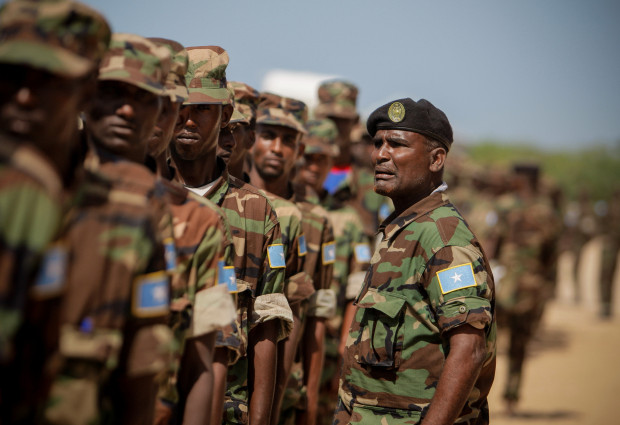
Mogadishu (WDN) – A stark warning from Somalia’s former National Security Adviser has reignited concerns over the country’s security future, as uncertainty grows over the eventual withdrawal of African Union peacekeeping forces.
Hussein Moallin, who previously served as Somalia’s National Security Adviser, cautioned that the departure of the African Union Support and Stabilization Mission in Somalia (AUSSOM) could place the country’s fragile state institutions at unprecedented risk, warning that Al-Shabaab remains capable of exploiting any major security vacuum.
“If African Union forces leave, we can only pray to God. I believe the very survival of the Somali state could depend on their continued presence,” Hussein Moallin said. His remarks come at a time when Al-Shabaab continues to control significant swaths of rural territory across southern and central Somalia, despite years of military campaigns by Somali forces supported by international partners.
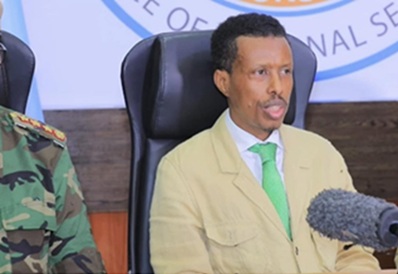
Moallin argued that Somalia’s security forces have not yet developed the operational capacity required to independently secure the country if international peacekeepers depart. According to him, while the Somali National Army has made progress in recent years, it remains heavily dependent on external support for logistics, intelligence, air support, and coordinated operations.
His assessment contrasts sharply with the position of the Federal Government, which has repeatedly maintained that Somalia is steadily building self-reliant national security institutions capable of assuming full responsibility for the country’s security. Government officials have consistently expressed confidence that Somali forces will eventually replace foreign peacekeepers as the primary guarantors of national security.
However, Moallin is far from alone in questioning that optimism. A growing number of Somali politicians, former security officials, and independent analysts have voiced concerns that a premature withdrawal of AUSSOM could reverse years of security gains, particularly in regions where Al-Shabaab remains deeply entrenched. They warn that the militant group has repeatedly demonstrated its ability to regroup, exploit political divisions, and reclaim territory after government offensives.
The debate has intensified following recent announcements by international partners regarding the gradual reduction of external security assistance, raising questions about whether Somalia’s security institutions are adequately prepared for the transition.
Security experts note that although Somali forces have expanded in size and capability, sustaining military gains requires more than battlefield victories. Effective governance, functioning local administrations, reliable logistics, and long-term stabilization efforts remain essential to preventing Al-Shabaab from re-establishing its influence in areas recovered by government forces.
Moallin’s warning underscores the difficult balance Somalia faces as it seeks to transition from nearly two decades of international peacekeeping support toward full security self-sufficiency.
Whether Somali forces are ready to shoulder that responsibility without substantial external assistance remains one of the country’s most consequential—and fiercely debated—national security questions.
WardheeerNews
Top of Form
Bottom of Form