
By Isha Qarsoon
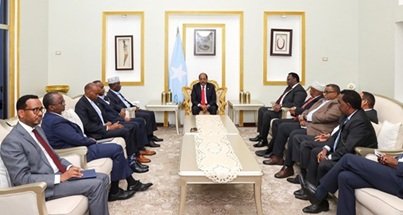
On August 25, 2025, Somalia’s political class announced that they had finally reached an agreement to end a two-month deadlock. A joint communiqué issued by the Federal Government and a faction of the National Salvation Forum set out the terms. The president would be elected by the Federal Parliament. Federal Member State assemblies would elect their own presidents and vice presidents. Members of Parliament would be chosen under the 2024 Electoral Law, with the National Independent Electoral Commission (NIEC) administering the vote. Political parties would require ten percent of parliamentary seats to be recognized at the national level. And the Provisional Constitution, provisional for thirteen years, would at last be completed.
The announcement might seem to generate relief in Mogadishu and beyond, but such relief is fleeting. The quick welcome from international partners is as shortsighted, and perhaps as self-congratulatory, as the compromise itself. Indeed, the agreement was not the breakthrough it was portrayed to be. It followed a familiar pattern: legality set aside for expediency, sovereignty reduced to bargaining, and the Constitution invoked but not upheld. For a public weary of stalemates and crisis politics, the agreement briefly suggested that the system might finally move forward, though in truth the elites are only leading the country—and its people—closer to the abyss.
The Provisional Constitution of 2012 promised two things that should have been beyond negotiation: that sovereignty rests with the people, and that Somalia’s system of government is federal. These were not symbolic statements. They were the bedrock of a fragile political settlement, intended to guarantee that government would be both accountable to citizens and balanced between center and states. But the August 25 agreement, like earlier bargains, compromised both principles. It did so by entrenching indirect elections, centralizing electoral management in federal institutions, and reducing constitutional finalization to a bargain among political elites rather than an issue for the citizens.
The Constitution itself could not be clearer about the role of the people. Article 1 declares that all power belongs to the people of Somalia. Article 64 specifies that members of the House of the People must be elected through a direct, secret, free ballot. Article 72 lays down the same expectation for the Upper House, which represents Federal Member States. And Article 22 guarantees every citizen the right to participate in public affairs directly or through freely chosen representatives. In short, sovereignty is not abstract—it is supposed to be exercised through direct elections. Yet no Somali has ever cast a ballot to elect a federal chamber. Since 2012, election after election has been delayed or diverted into indirect formats. Security conditions are always the justification. Leaders insist that direct elections would be too risky, too fragile, too destabilizing. At first this had some plausibility; by 2012 or even 2016, insecurity remained a real obstacle. But more than a decade later, the argument has hardened into routine. It has become a convenient excuse to keep power in the hands of elites, shielded from accountability. What began as an emergency exception has become the permanent rule.
The August 2025 agreement did not change this trajectory. Its communiqué pledged a transition toward universal suffrage elections—“one person, one vote” at local, state, and federal levels. But the path to that promise was left undefined. In the meantime, the deal entrenched the role of indirect methods and of the 2024 Electoral Law, which, instead of serving as the constitutional framework for choosing the federal president and legislators, has been weaponized to hijack state elections as well. Instead of advancing sovereignty, the agreement deferred it once again, treating the citizen’s vote as a perpetual aspiration rather than an enforceable right.
The role of the National Independent Electoral Commission illustrates the problem more starkly. Article 111G creates the Commission to oversee federal elections and referenda. Its purpose was to prepare the ground for universal suffrage at the federal level. It was never intended to control state and local elections, which fall within the authority of Federal Member States under Article 120. Yet in practice, federal politicians have expanded NIEC’s reach to cover all levels of the electoral process. The August 2025 agreement, by confirming NIEC as the body administering elections, consolidated this overreach. What should be an independent guarantor of federal elections has instead become an instrument of central power.
Supporters of this arrangement argue that Somalia’s fragmented landscape demands uniformity. If each Federal Member State designs its own electoral system, they warn, the result will be chaos, manipulation, and inconsistency. There is some validity to these concerns. A weak federation can suffer when practices diverge too widely. But federalism is not meant to eliminate difference—it is designed to balance it. Stripping states of their autonomy in the name of uniformity undermines the very principle the Constitution enshrines. It reduces federalism to rhetoric while building a unitary system in practice.
The reliance on the 2024 Electoral Law deepens this tension. That law, enacted in the midst of last year’s crisis, places sweeping electoral authority in federal hands. It defines how presidents and state leaders are chosen, regulates voter and candidate registration at all levels, and centralizes electoral management in a single commission. In doing so, it collapses the division of powers the Constitution requires. Article 4 declares that the Constitution is the supreme law of the land and that any law inconsistent with it is void. By rooting the August 2025 agreement in a law that intrudes on state sovereignty and violates several constitutional provisions, including Article 111G which establishes the commission itself, the elites have chosen expediency over constitutionality. A bargain cannot legalize what the Constitution prohibits.
The ten percent threshold for national party recognition provides another example. The Constitution allows regulation of political parties but also guarantees the right to form and join them. In fragile democracies, thresholds must be carefully designed. A ten percent requirement may be defended as a way to consolidate politics into larger, more stable groupings. But in Somalia’s context, it risks stifling competition and cementing the dominance of existing elites. Instead of opening the system to new political movements, it may narrow it further, reducing representation and accountability.
The pledge to finalize the Constitution carries the same danger. On the surface, the promise is attractive. A constitution labeled “provisional” since 2012 was always meant to be completed. Citizens have long awaited finalization. But the Constitution itself specifies how completion must occur. Articles 132 through 137 lay out amendment procedures that require parliamentary approval and, crucially, a national referendum. That referendum should have been held more than a decade ago, but political wrangling, constant maneuvering, and the failure of Somalia’s leaders to complete the necessary amendments to the Provisional Constitution prevented it. If finalization is achieved instead through political agreement without public participation, serious parliamentary debate, and a referendum, it will not be constitutional completion at all but simply another elite bargain presented as progress.
Taken together, the August 25 agreement did not strengthen Somalia’s constitutional order. It weakened it by normalizing once more the substitution of bargains for law. It is part of a pattern that has recurred since 2012. Every time a crisis threatens to paralyze the system, political elites negotiate a temporary fix. Yet these crises are the product of political elites’ inaction in the first place. Each deal is portrayed as pragmatic and necessary, but in reality it only defers the inevitable crisis that predictable inaction will bring, as every bargain sets aside constitutional procedures, deepens elite control, and pushes citizens further away from the institutions that claim to represent them. Over time, these bargains accumulate into a shadow constitution. What governs Somalia is not the text ratified in 2012, but the shifting agreements of its political class.
The consequences are profound. First, the repeated sidelining of the Constitution erodes trust. Citizens come to see institutions not as guardians of their rights but as tools of political bargains. Second, federalism is hollowed out. Member States are stripped of their autonomy, reduced to supporting actors in a system run from Mogadishu. Third, sovereignty is denied. The right of the Somali people to choose their representatives remains on paper, but in practice, power circulates only among a narrow circle of elites.
Some argue this is the best that can be managed in Somalia’s conditions. Insecurity, fragmentation, and weak institutions leave little room for strict constitutionalism, they say. Without bargains, the system might collapse altogether. The only measure of truth in this argument—that Somalia faces political crisis—is undone by the fact that these crises are created by the very inaction of the political elites; an emergency of your own making is not an emergency.
Constitutions do not enforce themselves. They require political will, and political will is shaped by circumstances. But when bargains become the default, they cease to be temporary bridges. They become the system itself. And once illegality becomes routine, the very possibility of rule of law fades.
The August 25 agreement was celebrated for ending a stalemate. But what it really achieved was the reinforcement of a dangerous cycle. It entrenched indirect elections rather than delivering on the constitutional promise of direct suffrage. It consolidated the NIEC as a tool of central power rather than an independent guarantor of federal elections. It attempts to give life to a law that contradicts the Constitution’s division of powers. It introduces thresholds that narrow competition in an already fragile democracy. And it promises to finalize the Constitution in a manner that sidesteps the procedures the Constitution itself requires.
Somalia is not advancing toward constitutional government. It remains trapped in the logic of elite bargains. Until that logic is broken, sovereignty will rest not with the people but with a handful of politicians, and federalism will remain a transaction rather than a principle. The Provisional Constitution declared in 2012 that Somalia would be a federal republic built on the power of its citizens. Thirteen years later, that promise remains deferred. Another bargain has been struck, but it is not law. It is an agreement among elites, one that may calm the moment but that leaves the foundations of Somalia’s constitutional order as fragile as ever.
Isha Qarsoon
Email: ishaqarsoon1@gmail.com
____________
Isha Qarsoon-is a platform dedicated to addressing critical issues pertaining to good governance, corruption, and social challenges. It emphasizes investigative journalism as a means to uncover and disseminate information, enabling the public to engage with and understand the realities of the country. Through its focus on transparency and accountability, the forum aims to foster informed public discourse and contribute to societal awareness and reform.
——-
Read related articles on WardheerNews archives