
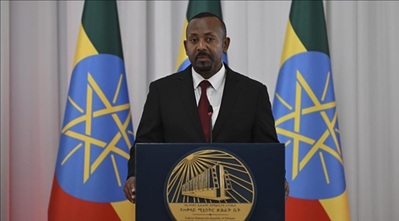
Addis Ababa (WDN) — Ethiopian Prime Minister Abiy Ahmed is reportedly seeking a sweeping overhaul of the country’s political system that could transform Ethiopia from a parliamentary federation into a presidential system and give the head of state significantly greater executive authority.
Under the reported proposal, Abiy could seek to become Ethiopia’s first president with full executive powers and serve two six-year terms. If adopted, the proposal would represent one of the most consequential changes to Ethiopia’s constitutional order since the current federal system was established.
The reported initiative is part of a broader debate over constitutional reform that has emerged within Ethiopia’s National Dialogue process and the ruling Prosperity Party.
From Parliamentary Rule to Presidential Power
Ethiopia currently operates under a parliamentary system in which the Prime Minister is the head of government, while the president is largely a ceremonial head of state. The prime minister is elected by the House of Peoples’ Representatives, normally from the political party or coalition that commands a majority.
The proposed shift would fundamentally alter that arrangement. A presidential system would concentrate executive authority in the presidency and could significantly strengthen the central government, particularly if the president were given a direct electoral mandate and broad powers over national institutions.
Reports indicate that some participants in the National Dialogue on August 13 proposed replacing the existing parliamentary system with a presidential model.
Abiy himself reportedly raised the issue in July 2026 when addressing members of the Prosperity Party, emphasizing the idea that the country’s leader should be limited to two terms.
Critics, however, question whether term limits alone would provide sufficient protection against excessive concentration of power if the presidency itself were granted substantially greater constitutional authority. The proposed constitutional changes have also raised concerns about the future of Ethiopia’s federal structure.
Ethiopia’s federal system gives significant constitutional powers to regional states, including authority over matters of self-government and cultural and political affairs. One of the most controversial provisions is Article 39, which recognizes the right of Ethiopia’s nations, nationalities and peoples to self-determination, including the right to secession.
For decades, Article 39 has effectively served as the federation’s ultimate constitutional exit door—a powerful guarantee intended to reassure Ethiopia’s diverse nationalities that membership in the federation is not irrevocable.
Any attempt to remove, weaken or substantially restrict that provision would therefore have implications far beyond constitutional wording. It would raise a fundamental question: Can Ethiopia remain a genuinely federal state if the regions’ ultimate constitutional safeguard is removed while executive authority is simultaneously concentrated at the center?
Critics of the reported proposals fear that the combination of a powerful presidency and reduced regional autonomy could gradually transform Ethiopia’s federal system into a more centralized state. Such a change could alter the balance between Addis Ababa and the regional governments, particularly in areas involving political representation, security, resource management and regional self-government.
Supporters of constitutional reform, however, may argue that a presidential system could provide greater political stability, clearer executive accountability and a more direct relationship between voters and national leadership.
The central issue is therefore not simply whether Ethiopia should change its political system, but how much power should be concentrated at the federal level and what constitutional safeguards should remain in place to protect the regions.
Article 39: The Constitutional Exit Door
The debate surrounding Article 39 is potentially even more sensitive.
The provision has long been one of the defining features of Ethiopia’s federal constitution. It recognizes the rights of nations, nationalities and peoples to self-determination, including secession under constitutional procedures.
Removing or weakening that provision would eliminate what many regard as the federation’s ultimate guarantee that regional identities and political aspirations cannot simply be overridden by the central government.
For opponents of the proposed changes, the danger is clear: a stronger presidency combined with a weaker federal structure and a diminished Article 39 could fundamentally redistribute power from Ethiopia’s regions to Addis Ababa.
Ethiopia is therefore approaching a potentially historic constitutional debate.
A transition from parliamentary government to an executive presidency would not merely change the title of the country’s leader. It would redefine the relationship between the executive, parliament, regional states and the electorate.
If accompanied by restrictions on regional autonomy and changes to Article 39, the reforms could represent an even deeper transformation—the movement away from Ethiopia’s current multinational federal model toward a more centralized political order.
For Abiy Ahmed, the proposed two-term limit could provide a framework for a new presidential era. For Ethiopia’s regional states, however, the more consequential question may be what happens to their constitutional powers once the center becomes significantly stronger.
The debate is ultimately about more than who occupies the presidential palace. It is about where power resides—and whether Ethiopia’s federal compact will be strengthened, fundamentally rewritten, or gradually hollowed out from the center.
WardheerNews