
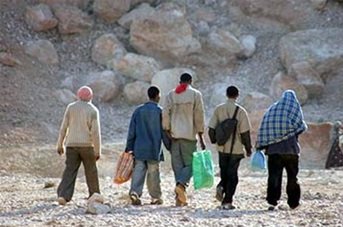
BOSASO (WDN) – A renewed influx of Ethiopian migrants into Puntland has been reported this week, raising fresh security and humanitarian concerns in the northeastern Somali region.
According to local sources and eyewitnesses, hundreds of migrants—primarily from Ethiopia’s Oromo ethnic group—have been arriving in Puntland in recent days. They are mostly traveling on foot along the long highway connecting the regional capital, Garowe, with the coastal city of Bosaso, a key transit hub for migrants attempting to reach Yemen via the Gulf of Aden.
The migrants, many of whom are young men, say they are fleeing conflict, poverty, and political instability in Ethiopia. Some hope to find work in Bosaso, while others plan to risk the dangerous sea crossing to Yemen, with the ultimate goal of reaching Gulf countries.
This renewed wave of arrivals comes despite Puntland’s recent crackdowns on undocumented migrants. During the conflict in Almiskad earlier this year, Puntland authorities deported hundreds of Ethiopian nationals, specifically targeting members of the Oromo community. The expulsions followed intelligence reports linking some of the migrants to the Islamic State (ISIS) group, which maintains a presence in Puntland’s rugged mountainous areas.
In response to the growing security concerns, the Puntland administration has repeatedly issued directives to restrict the movement and settlement of foreign nationals within its territory. The most recent measure was reaffirmed during a security meeting held last Thursday in Bosaso, where officials renewed a standing order that prohibits the entry of undocumented foreigners, including Ethiopian migrants.
Local residents and community leaders have expressed mixed feelings about the situation. While some sympathize with the migrants’ plight, others are increasingly worried about the strain on local resources and the potential for infiltration by armed groups exploiting the chaos.
Despite the risks, migration through Puntland continues unabated, driven by desperation and a lack of alternatives. With limited federal oversight and a porous border, Puntland remains both a destination and a transit point in the region’s complex migration network.
The Puntland government has yet to announce any new policy measures to deal with the latest surge, but security officials say monitoring efforts are being intensified to prevent extremist elements from exploiting the humanitarian flow.
WardheerNews