
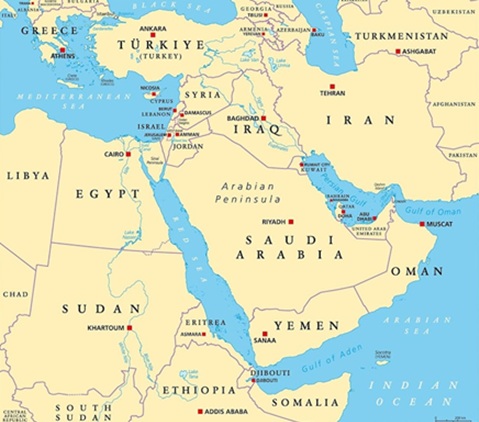
Asmara (WDN) — Eritrean Foreign Minister Osman Saleh has warned that any Israeli plan to establish a military presence in Somaliland could have far-reaching consequences for the security and stability of the Red Sea and Gulf of Aden, questioning what strategic purpose such a deployment would serve.
Saleh said Eritrea is closely monitoring military and strategic developments in the Red Sea and Horn of Africa, where growing competition among regional and international powers is already reshaping the security environment.
His warning comes amid increasing discussion over the possibility of Israel establishing a military foothold in Somaliland. Saleh questioned the rationale behind any Israeli military base in the region and cautioned that such a development could alter the existing strategic balance.
The Eritrean minister did not say that Israel had formally established such a base. Rather, his comments focused on the potential consequences should Israel establish a permanent military presence in Somaliland.
The Red Sea and Gulf of Aden form one of the world’s most important maritime corridors, linking the Indian Ocean with the Suez Canal and carrying a significant volume of global trade. Eritrea’s concern is therefore that a new foreign military deployment could have consequences well beyond the territory hosting it.
The threat of Israeli Presence
Eritrea’s warning comes as the Red Sea has become an increasingly contested security environment. Israel already faces security challenges linked to attacks on commercial shipping and the activities of the Iran-aligned Houthi movement in Yemen.
A permanent Israeli military facility on the African side of the Gulf of Aden could potentially provide Israel with greater access to maritime surveillance, intelligence gathering and regional security operations. But it could also make Somaliland more exposed to conflicts involving Israel and its adversaries.
Eritrea’s central concern is that a military presence intended to strengthen one country’s security could create new risks for the wider region. An Israeli military installation in Somaliland could be viewed by the Houthis or other hostile actors as a strategic extension of Israeli military power into the Red Sea region.
The danger, therefore, would not necessarily be the presence of Israeli troops itself. It would be the possibility that Somaliland could become drawn into a wider confrontation involving Israel, Iran and armed groups operating around the Red Sea.
Eritrea’s Strategic Concern
Saleh’s comments reflect Eritrea’s longstanding sensitivity to the militarization of the Red Sea. Eritrea has a long coastline along the Red Sea, directly opposite Yemen, giving developments on either side of the waterway immediate strategic significance for Asmara.
By questioning the purpose of an Israeli military presence in Somaliland, Eritrea is effectively warning that the Red Sea should not become an arena for competing foreign military projects.
For Eritrea, the concern is not limited to Israel. Every additional military actor potentially changes the calculations of every other actor already operating in the region.
Somaliland Could Become a Front Line
The greatest potential risk for Somaliland would be becoming a frontline location in conflicts originating elsewhere.
A foreign military presence can bring investment, infrastructure, diplomatic leverage and security cooperation. But it can also make the host territory a potential target.
If Israel were to establish a military facility in Somaliland, armed groups hostile to Israel could potentially regard the facility as a legitimate strategic target—even if Somaliland itself had no direct role in the underlying conflict.
That could expose civilians, ports, airports and commercial infrastructure to heightened security risks. It could also complicate Somaliland’s relations with Somalia, Djibouti and Eritrea, all of which have strategic interests in the Red Sea and Gulf of Aden.
The Houthi Factor
The Houthi movement represents one of the most immediate potential security concerns. The group has demonstrated its willingness to attack commercial vessels and targets it associates with Israel and its allies in and around the Red Sea.
A permanent Israeli military presence on the African side of the Gulf of Aden could therefore potentially become another target in the group’s strategic calculations.
Even without an actual attack, the perception that Somaliland is hosting an Israeli military facility could alter the security environment.
Shipping companies could reassess risks. Regional governments could increase military deployments. Intelligence activity could intensify. Armed groups could attempt to establish new networks along the coastline. That is how a military presence intended to provide security could generate a new layer of insecurity.
A Wider Regional Arms Race
Eritrea’s warning also points to a broader question: what would other powers do in response to a new Israeli military foothold?
The Horn of Africa already hosts or attracts military facilities and strategic interests involving the United States, China, Turkey, Gulf states and other international actors.
An Israeli military presence could encourage competing powers to seek greater access to ports, airfields and strategic coastline. The result could be a gradual militarization of the Gulf of Aden rather than greater stability.
This is why Eritrea’s warning extends beyond Eritrea’s immediate national interests. The concern is that one new military arrangement could trigger a chain reaction involving several other powers.
ForSomalia’s sovereignty question, Eritrea’s warning also intersects with Somalia’s unresolved dispute over Somaliland’s status. The Federal Government regards Somaliland as part of Somalia, while Somaliland operates as a self-governing entity and seeks international recognition as an independent state.
Any agreement allowing a foreign military to establish a permanent presence in Somaliland would therefore carry significant political and sovereignty implications.
Mogadishu could regard such an arrangement as a challenge to Somalia’s territorial sovereignty, potentially escalating tensions between the Federal Government and Somaliland. The prospect of an Israeli military presence could consequently add another layer to an already complicated political and security dispute.
From Strategic Asset to Strategic Liability
For Somaliland, the attraction of a military partnership with Israel would be understandable if it promised diplomatic recognition, investment, security cooperation or economic benefits. But Saleh’s warning highlights the other side of that calculation.
A military base may increase geopolitical relevance while simultaneously increasing vulnerability. The territory hosting it becomes more important—but potentially more exposed.
The critical question would therefore be whether Somaliland could obtain sufficient political and economic benefits to justify the additional security risks. Saleh’s remarks ultimately raise a question that extends beyond the Israeli-Somaliland relationship:
Can the Red Sea absorb another major foreign military presence without becoming even more dangerous?
Eritrea clearly believes the possibility deserves serious scrutiny. The Red Sea and Gulf of Aden are already under pressure from regional conflicts, maritime insecurity and competition among external powers.
Every new military base changes the regional security calculation. Every new military alliance creates potential targets. And every new foreign deployment risks drawing local territories into conflicts that originate elsewhere.
If Israel were to establish a military presence in Somaliland, the question would therefore not simply be what Israel gains. It would also be what new risks Somaliland, Somalia, Eritrea and the wider Horn of Africa inherit.
That is the core of Saleh’s warning: a military facility intended to strengthen one country’s strategic position could inadvertently make the surrounding region a more dangerous place.
WardheerNews