
By Abdikarim Haji Abdi Buh
Today, Muslims around the world observe Eid al-Adha, the “Festival of Sacrifice,” one of the most sacred and spiritually significant holidays in the Islamic calendar. For me, this day holds even deeper meaning—it marks not only a collective moment of faith and unity for the global Muslim community but also the day I was born. To share my birthday with Eid al-Adha is a blessing that continues to humble me year after year.
As worshippers gather in mosques, open fields, and community centers across continents—from Africa to Asia, Europe to the Americas—the essence of the day resounds clearly: sacrifice, submission to God’s will, and compassion for others.
The Legacy of Prophet Ibrahim
Eid al-Adha commemorates the story of Prophet Ibrahim (Abraham), whose faith was tested in the most profound way imaginable. In obedience to Allah’s command, he prepared to sacrifice his beloved son Ismail (Ishmael). At the final moment, Allah, seeing the depth of Ibrahim’s devotion, replaced Ismail with a ram, sparing the boy and rewarding the Prophet’s absolute submission.
This act of divine intervention and the unwavering faith it represents serve as the foundation for the rituals performed during Eid. Muslims who are financially able offer the sacrifice of livestock—a sheep, goat, cow, or camel—and distribute the meat in three parts: one for themselves, one for family and friends, and one for the poor and needy. It is an act that transcends culture and geography, uniting believers in generosity and remembrance.
More Than a Ritual: A Universal Message
While the image of livestock sacrifice is often the most visible symbol of Eid al-Adha, its deeper message is far more encompassing. This is a holiday that invites us to reflect on the nature of sacrifice—not just in ritual form, but in our daily choices, relationships, and responsibilities.
Sacrifice may mean giving up comfort to help a neighbor, setting aside pride to forgive, or dedicating time and resources to serve others. In a world where individualism often dominates, Eid al-Adha reminds us that true fulfillment lies in submission to a higher cause, in service to humanity, and in aligning one’s life with ethical and spiritual principles.
A Time of Prayer, Family, and Compassion
The day begins with a special Eid prayer, held shortly after sunrise. Muslims wear their finest clothes, cleanse their bodies and hearts, and join in congregational worship. In many regions, these prayers are held in vast open areas, symbolizing unity and inclusivity. Afterward, families visit relatives, share meals, and extend greetings of “Eid Mubarak,” wishing each other a blessed celebration.
Charity lies at the heart of Eid al-Adha. Alongside the distribution of sacrificial meat, many take the opportunity to offer additional donations (sadaqah), support community initiatives, and reach out to those who are suffering or isolated. It is a time when social divides are meant to dissolve, replaced by compassion and mutual respect.
Faith in a Fractured World
Yet, even as we celebrate, the world around us offers sobering reminders of the challenges many Muslims face. From displacement and conflict to economic hardship and political instability, the full observance of Eid traditions is not always possible for every family.
In regions like Gaza, Sudan, Somalia, and parts of Yemen, where violence and humanitarian crises persist, families may find it difficult or impossible to gather, pray, or sacrifice animals. In these places, the holiday’s message of resilience, unity, and divine mercy becomes even more poignant.
And yet, year after year, Muslims continue to uphold the spirit of Eid al-Adha—even when the rituals are simplified or disrupted. The strength of this holiday lies not in material expressions, but in faith itself.
A Personal Reflection
Eid al-Adha is a source of personal reflection and gratitude. It feels like a divine alignment—an annual reminder that my entry into the world coincided with a day that symbolizes total trust in God, noble intention, and spiritual integrity.
It’s a quiet reminder that the gift of life is itself sacred, and with each passing year, I feel a deeper responsibility to live a life guided by the same principles that this holiday celebrates: humility, service, sacrifice, and steadfast faith. This represent a chance to reassess, to contemplate the legacy I am building, the communities I am serving, and the intentions I set forth. Sharing my birthday with Eid al-Adha challenges me to keep these reflections grounded—not in vanity or personal glory, but in devotion to something greater.
Looking Forward with Hope
In a time marked by global uncertainty, division, and fatigue, the teachings of Eid al-Adha are more relevant than ever. They call on us to reorient ourselves—to sacrifice not for the sake of tradition alone, but in pursuit of justice, peace, and spiritual growth.
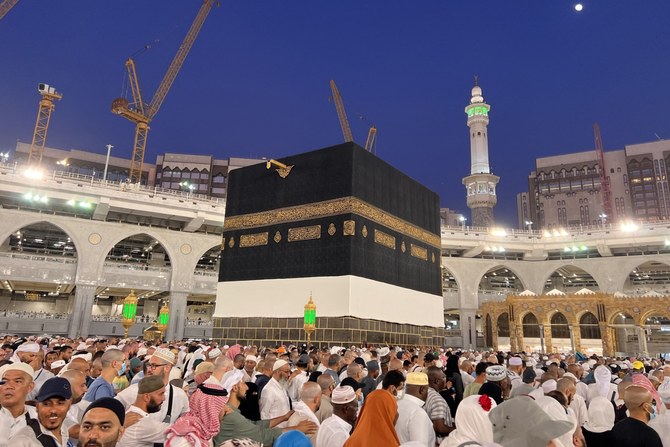
As the pilgrims in Mecca complete their Hajj and Muslims across the world break bread in the spirit of community, I feel a renewed sense of connection—not only to my faith but to the vast and diverse ummah (Muslim community) that continues to thrive despite adversity.
This year, as I celebrate both Eid al-Adha and my birthday, I am reminded of the dual blessing of faith and time. One offers direction, the other offers opportunity. Together, they form a path forward. May this Eid inspire us all to give more, judge less, and live lives rooted in meaning. Eid Mubarak—and Happy Birthday to me.
Abdikarim Haji Abdi Buh
Email: abdikarimbuh@yahoo.com