
By Osman Ali Hassan
The political moment in which Somalis in the United States became targets of rhetorical degradation, immigration intimidation, and collective suspicion under the Trump administration was not accidental, temporary, or disconnected from broader geopolitical maneuvering. Rather, it formed part of a coordinated atmosphere of fear—carefully cultivated through language, enforcement, and foreign policy signaling—designed to weaken Somali confidence both in the diaspora and in the Horn of Africa itself. When Donald Trump’s crude “garbage” rhetoric toward Somalia is examined alongside aggressive ICE operations across U.S. states such as Minnesota, Ohio, Washington, and California, and then placed next to the foggy, externally promoted idea of Somaliland’s recognition through Israel, a coherent pattern emerges. The objective was not justice, law enforcement, or diplomatic clarity. The end game was fear, hopelessness, and political submission.
Trump’s language toward Somalia was not merely offensive speech. It functioned as political framing. To describe a country and by extension its peopleas “garbage” is to remove it from the moral universe of equal humanity. Such language prepares the ground for policies that would otherwise be publicly unacceptable. It lowers the threshold for abuse. It signals to enforcement agencies, foreign governments, and political allies that Somalis occupy a space of disposability. Once that message is normalized at the highest level of power, every downstream action whether immigration raids or experimental diplomacy becomes easier to justify. Within the United States, this framing materialized through ICE operations that disproportionately targeted Somali communities, despite the legal reality that Somalis in the U.S. are present lawfully. Logistically and legally, the facts are clear: approximately 700 Somalis were either fully documented or actively engaged in the immigration court system, awaiting hearings, appeals, or administrative resolutions. These individuals were not “illegal,” not fugitives, and not outside the law. They were doing exactly what the U.S. legal system requires following process. To portray this population as criminal or unlawful was a deliberate distortion.
The weaponization of a few criminal cases within a large community served a familiar political function. Every society contains individuals who commit crimes; Somali communities are no exception. But Trump’s strategy, amplified by sympathetic media and enforcement theatrics, was to universalize guilt. The crimes of a few were inflated into the identity of many. This tactic is neither new nor unique to Somalis. It has historically been used against Black Americans, Muslims, immigrants, and refugees to justify collective punishment. What made it particularly dangerous in this case was the transnational implication: the fear was not meant to stop at U.S. borders. Minnesota, home to the largest Somali population in the United States, became the psychological epicenter of this strategy. ICE raids, publicized arrests, sudden detentions, and the constant threat of deportation created an environment of chronic anxiety. Families avoided public spaces. Parents feared driving to work. Community trust in institutions eroded. This was not collateral damage; it was the intended outcome. Fear, once internalized, polices behavior more efficiently than force. The message was unmistakable: legality offers no protection when political power decides otherwise.
Yet the intimidation of Somalis inside the United States was only one side of the strategy. The other side operated through foreign policy ambiguity specifically the suggestion, floated and denied repeatedly, that Somaliland could gain recognition through Israel with U.S. blessing. This was not diplomacy; it was psychological warfare by suggestion. The fog was intentional. By refusing clarity while allowing speculation to spread, the Trump administration created a climate in which Somalis everywhere felt surrounded by uncertainty. The underlying logic was simple. If Somalis in the U.S. could be made to feel unwanted and insecure, and Somalis in Somalia could be made to feel diplomatically cornered and fragmented, resistance would weaken. Fear narrows political imagination. Hopelessness suppresses collective action. In such an environment, externally driven narratives no matter how legally flawed can appear inevitable.
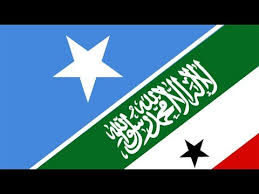
The idea that Somaliland could be “recognized” through Israel must be understood within this framework. It was never about international law, Somali consensus, or genuine self-determination. It was a primitive form of recognition politics, rooted in symbolism rather than legality. International law is unambiguous: Somaliland cannot become an independent state without Somalia’s consent and without adherence to African Union principles that reject unilateral secession. No amount of bilateral symbolism can override this reality.
History reinforces this point. The United States and Israel have recognized Taiwan for decades, yet Taiwan remains excluded from the United Nations and exists in a permanent state of diplomatic limbo. Recognition without multilateral legitimacy does not create sovereignty; it creates vulnerability. Applying this model to Somaliland would not liberate it. It would trap it in perpetual uncertainty, dependency, and geopolitical exploitation. This is why the comparison matters. Taiwan’s case demonstrates that recognition by powerful allies does not resolve foundational legal questions. It simply freezes them. To suggest that Israel’s recognition could meaningfully transform Somaliland’s status is either a profound misunderstanding of international law or a deliberate misrepresentation designed to manipulate expectations. In either case, it reflects the same disregard for Somali agency that characterized Trump’s domestic immigration policies.
What connects Trump’s “garbage” rhetoric, ICE intimidation, and the Somaliland recognition narrative is not coincidence but coherence. Each element reinforced the others. Dehumanization at home normalized coercion abroad. Immigration fear weakened diaspora advocacy. Diplomatic ambiguity deepened internal Somali divisions. Together, they formed a single architecture of pressure. Crucially, this strategy relied on misinformation. First, it falsely implied that Somalis in the U.S. were undocumented or criminal. They are not. Somalis are in the United States legally, protected by the same laws that govern all residents and citizens. Second, it implied that recognition is a shortcut to statehood. It is not. Third, it suggested that fear is destiny. It is not.The attempt to govern through fear ultimately reveals weakness, not strength. A confident political system does not need to intimidate refugees or experiment with fragile regions. It does not need to insult nations or destabilize communities to project power. Trumpism, stripped of its spectacle, was reactive—a response to demographic change, global multipolarity, and the erosion of unilateral control.
For Somalis, the lesson is sobering but clarifying. Although the current administration headed by President Hassan Sh. Mohamud is responsible for the chaos, political instability, and corruption, nevertheless, the struggle is not merely against one administration or one policy. It is against a recurring pattern in which Somali lives are treated as negotiable, no domestic or foreign policy strategy, corruption normalized, communities as test cases, and sovereignty as a bargaining chip. Whether through foreign recognition schemes or immigration enforcements, the objective remains the same: manage Somalis rather than respect them. Yet history also teaches that fear has limits. Communities subjected to intimidation develop political memory. The Legal clarity outlasts propaganda. International law, however slow, resists improvisation. Somaliland’s future cannot be engineered through external fear campaigns, just as Somali Americans cannot be erased through immigration theatrics. In connecting these dots exposes the illusion at the center of the strategy. Fear may silence temporarily, but it cannot rewrite law, history, or collective dignity. The Somali people, whether in Minnesota or Mogadishu, Hargeisa or Minneapolis remain bound by legal reality, historical continuity, and a shared refusal to accept humiliation as policy. In the end, the “garbage” rhetoric, the ICE intimidation, and the foggy recognition narrative reveal more about the insecurity of power than the weakness of Somalis. And once that truth is understood, fear loses its authority.
By Osman Ali Hassan
Email: abayounis1968@gmail.com