
By Shamsa Sheegow
The Crisis in Somali Politics: A Nation at a Crossroads
In recent months, Somalia’s fragile political landscape has taken a dangerous turn. The federal government has unilaterally amended the constitution, sidelining key regions such as Puntland and Jubbaland. The National Consultative Council (NCC) — once a crucial forum where the federal government and regional states consulted and negotiated — has been dissolved. In its place, the ruling elite has launched a new political party, uniting government officials, parliamentarians, and regional leaders under a single banner.
This political maneuvering, celebrated by government loyalists and local officials, is widely seen as a step toward entrenching power for a prolonged leadership, sidelining opposition voices, and regional autonomy. Meanwhile, former ministers, prime ministers, and foreign ministers have formed a coalition called the Somalia Salvation Coalition; notably, no women occupy high-ranking positions within this alliance. Why?
Instead of promoting unity or addressing the country’s pressing challenges, these political figures engage in public displays of demands, media-driven photo ops, and sarcastic social media posts filled with bullying and arrogance. Intellectuals associated with political factions amplify this divisive narrative while Somalia continues to suffer.
What we are witnessing is not genuine governance but a spectacle of power struggles disguised as politics. The government, opposition coalitions, and former leaders trade press releases and engage in public posturing rather than substantive dialogue. Their media appearances and photo opportunities with foreign dignitaries are carefully choreographed performances designed to project strength and legitimacy, but behind the scenes, real governance is failing.
Ministers and officials use social media to mock and belittle their opponents, creating a toxic atmosphere of division and disrespect. Intellectuals and commentators from various political camps echo these sentiments, exacerbating societal fractures instead of fostering healing or progress. The ongoing infighting distracts from the urgent needs of millions of Somalis who face daily hardships.
This battle for power is a zero-sum game where winning means pushing others out, not serving the Somali people. It is a political theater that values loyalty over competence, arrogance over accountability, and rivalry over unity.
The Human Cost
While politicians engage in power struggles, the people of Somalia bear the heaviest burden. Thousands of young Somalis risk their lives each year, fleeing in desperate hopes of a better future in Europe, only to face perilous journeys that often end in tragedy.
Al-Shabaab continues to operate with relative freedom, threatening security and stability across large areas of the country.
Recurrent floods and famines continue to devastate communities, forcing hundreds of thousands into displacement. For over 35 years, the number of internally displaced persons has been steadily increasing, serving as a grim testament to the country’s ongoing instability.
Despite billions of dollars in donor aid, Somalia remains one of the most insecure places on Earth. The funds intended to build security and infrastructure seldom reach those in need; instead, they often disappear into what appears to be a maze of corruption and mismanagement.
In the midst of this suffering, every day Somalis wait, hoping for relief, for peace, and for leaders who will govern with their interests in mind. Yet time and again, their hopes are dashed by empty promises and political maneuvering.
“Kana siib sana saar”
Somalia’s political problems stem from strong clan loyalties. Clan identity is not just cultural—it is a primary source of political power, social protection, and economic opportunity.
Somali politicians run for office not to serve their people but to gain and maintain power. They don’t even serve their clans.
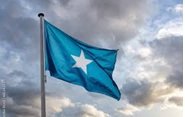
The saying “Kana siib, kana saar” — “remove this, replace it with this” — perfectly encapsulates the cycle of political rivalry. I hate to use this patriotic phrase, once used to remove the colonial flag and raise the Somali flag proudly, but it painfully illustrates how far—or rather how backward-we have come. Every five years, politicians battle to oust rivals, only to perpetuate the same visionless leadership. Meanwhile, the Somali people stand paralyzed, unable to reclaim their agency or demand better.
Because politicians compete primarily for power and influence within their clans, genuine accountability to the broader Somali people is often absent. The result is a political culture driven by patronage, exclusion, and transactional alliances, rather than policy, governance, or service delivery.
This system alienates many citizens, particularly youth and women, who feel marginalized from the corridors of power. The exclusion of women from high-ranking opposition roles, for instance, illustrates the broader failure to create inclusive politics that reflect Somalia’s diverse population.
The Paralysis of the Somali People
Perhaps the most heartbreaking consequence of this broken system is the widespread paralysis among the Somali people themselves. After decades of conflict, broken promises, and political chaos, many Somalis have become resigned to a grim status quo.
The collective sense of powerlessness is evident. Ordinary citizens—especially young people—often feel unable to reclaim their agency or demand meaningful change. Distrust runs deep, not only towards politicians but also often between communities themselves, fractured by clan divisions and years of violence.
This paralysis fuels a dangerous cycle. Without a mobilized and engaged citizenry to hold leaders accountable, political elites continue to act with impunity. Every five years, the same struggle for power repeats itself, with new groups replacing old ones, but little changes on the ground.
The result is a population standing still, watching as opportunities slip away, as young people risk everything to escape, and as Somalia’s potential remains unrealized.
We need Accountability
Somalia stands at a crossroads. The old ways of politics, dominated by clan divisions and endless power struggles, have repeatedly failed the people. Traditional donor aid and international interventions, while well-intentioned, have not provided lasting peace or development. As a Swedish taxpayer, I ask: How much longer can Europe and the international community continue to invest billions into Somalia with so little to show for it?
Every year, young Somalis risk their lives crossing dangerous routes to Europe, driven by desperation and a lack of opportunity at home. Refugees continue to arrive on European shores, many fleeing the very chaos that donors claim to be addressing. If Somalia had true peace and opportunities, would these young people leave their breathtakingly beautiful country?
As a social worker in Sweden, I meet these young people again on the other side of a new immigration system. I see them struggling with mental health challenges, substance abuse, and homelessness. Life here is not easy. The trauma of displacement doesn’t end at the border; it simply takes on a new form.
As a European taxpayer, I recognize the importance of accountability in foreign aid. The recent decision by the Trump administration to cut USAID funding has sparked debate, but it highlights a critical point: donors must be transparent and responsible with their resources. I expect the European Union and other international donors to follow this path by rigorously tracking how their aid is used and ensuring it genuinely benefits the Somali people.
Other questions to ask are: How can the United Nations justify maintaining a peacekeeping mission in Somalia for nearly thirty years without meaningful progress? What exactly has “securitization” achieved? Where is the transparency surrounding the billions of dollars spent? Why aren’t there tangible, sustainable solutions to Somalia’s ongoing conflicts and humanitarian crises?
If donors want to see real change, they must stop funding the status quo and invest in initiatives that build Somali agency and sustainable peace, not just temporary stability or political theatre.
Conclusion
Somalia’s future hangs in the balance. Ongoing political struggles, entrenched clan divisions, and long-standing dependence on foreign aid have pushed the country to a critical crossroads. Without meaningful change, many young Somalis will continue to risk everything to leave, and Somalia’s immense potential may once again go unrealized.
Yet, there are signs of hope. In recent years, we’ve seen improvements in education, healthcare, and the business sector in cities such as Mogadishu, Garowe, Bosaso, Las Anod, Baidoa, Dhusamareb, Kismayo, Gedo, Hobyo, and many other towns in Somalia. These gains, however, have primarily resulted from privatized efforts and localized initiatives, often outside the framework of national governance. The process of federalization, despite its flaws, has enabled many regions to pursue development tailored to their local needs. This decentralized growth is fragile and would likely be underminedby any return to centralized, one-party rule, an era whose failures helped ignite the civil war.
So while much continues to go wrong, we must not overlook what is going right. The resilience of the Somali people, expressed in their creativity, endurance, and deep-rooted attachment to their homeland, is a powerful force. Real hope lies not in recycling the same elite class or preserving the status quo, but in breaking the paralysis and empowering a new generation of leaders committed to service, inclusion, and real accountability.
This moment needs strong ideas and teamwork. Somali leaders, civil society, the diaspora, and international partners must unite to build a Somalia that is inclusive, responsible, and has a clear vision.
We must act now to ensure openness and accountability in starting a proper reconciliation process.
This will help heal the country and prevent another generation from suffering through conflict, displacement, and despair.
Shamso Sheegow
Email: Shamsa.scego@gmail.com
———–
Shamso is an author, activist and student of Global Studies.
X @SpotonSomalia