
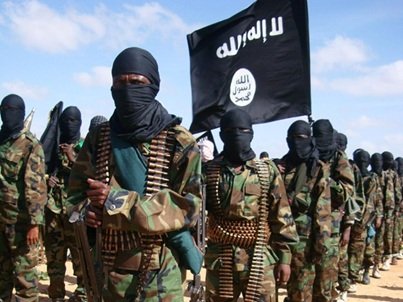
CEELBUUR, GALGADUUD (WDN) — Al-Shabaab has reportedly agreed to finance civilian infrastructure projects in Ceelbuur, central Somalia, in what could mark a significant development in the group’s efforts to consolidate its influence and present itself as a governing authority in territories under its control.
Reports from Ceelbuur indicate that Al-Shabaab representatives and members of Hawiye sub-clans from areas of Galmudug have signed an agreement to end previous hostilities and establish peaceful relations and cooperation.
Under the reported agreement, projects in Ceelbuur—including the drilling of water wells, construction of educational facilities and establishment of a health centre—are expected to be undertaken with the group’s involvement.
If implemented, the arrangement would represent a notable development in Al-Shabaab’s approach to local communities. The group has long been associated with coercive taxation, intimidation and violence. Its reported commitment to finance basic infrastructure suggests an effort to combine its existing system of revenue collection with visible provision of services.
The agreement’s precise terms, funding arrangements and implementation have not yet been independently verified.
From Taxation to Service Provision
Al-Shabaab has developed an extensive revenue-collection system across areas under its influence, imposing taxes and levies on businesses, traders, farmers, transport operators and local communities. Its financial networks have also reportedly reached into government-controlled commercial centres, including Mogadishu, where businesses and other economic actors have faced demands for payments.
Reports have identified telecommunications companies, private banks and other businesses among the sectors exposed to the group’s taxation and extortion networks. The scale and mechanisms of these payments vary, and individual claims require careful verification.
The group’s ability to generate revenue beyond the territories it directly controls has long raised questions about how it finances its operations and why its financial networks remain difficult to dismantle.
Its territorial reach and revenue system have also challenged the assumption that the Federal Government of Somalia’s control of major cities necessarily translates into exclusive authority over the country’s economy and financial flows.
The reported Ceelbuur agreement introduces another dimension: whether Al-Shabaab is now seeking to turn some of the revenue it collects into visible civilian projects that could strengthen its standing among local communities.
A Bid to Consolidate Local Influence?
Water wells, schools and health facilities address urgent needs in communities where public services may be scarce or difficult to access. By financing such projects, Al-Shabaab could seek to reinforce local cooperation, cultivate acceptance and portray itself as capable of providing services where government institutions have struggled to do so.
That possibility should not be confused with evidence that the group has abandoned coercion or fundamentally changed its ideology. Nor does the reported agreement establish that Al-Shabaab has launched a nationwide programme of civilian infrastructure development.
Nevertheless, the development deserves attention. Armed groups that aspire to govern territory may seek to combine force, taxation, local agreements and selective service provision to deepen their influence. If the Ceelbuur arrangement is implemented, it could offer an example of how Al-Shabaab seeks to strengthen its position beyond military operations alone.
The agreement also raises questions about the circumstances that led local communities to negotiate with the group, the security guarantees involved and whether residents will be able to access the proposed facilities without intimidation or political conditions.
The Taliban Comparison
The reported development has drawn comparisons with the Taliban in Afghanistan, which built systems of local administration and taxation before returning to national power in 2021. The comparison is not exact: Somalia and Afghanistan have different political, social and security environments. But it highlights a broader concern about how armed movements can seek legitimacy and consolidate control through a combination of coercion, local accommodation and governance structures.
There is not enough evidence from the Ceelbuur agreement alone to conclude that Al-Shabaab is pursuing the same trajectory or that it is preparing to assume national power through a comparable process.
What is clear is that the group’s activities cannot be understood solely through battlefield developments. Its capacity to raise money, exert pressure on economic actors, negotiate with communities and potentially finance public works also forms part of its broader challenge to the Somali state.
A Challenge for the Federal Government
For the Federal Government of Somalia, the reported agreement is a reminder that confronting Al-Shabaab requires more than military operations. It also demands stronger public services, reliable local administration, protection for businesses against extortion and effective measures to disrupt the group’s financial networks.
The government and its international partners must also address the conditions that leave communities vulnerable to armed groups offering—or claiming to offer—security, dispute resolution and basic services.
If Al-Shabaab can collect substantial revenues while communities continue to face shortages of water, education and healthcare, the problem is not only how the group raises money. It is also whether legitimate public institutions can provide the services and security that citizens need.
The reported agreement in Ceelbuur therefore deserves scrutiny. Its significance will depend on whether the projects are actually delivered, how they are financed and whether local communities benefit without coercion.
Al-Shabaab’s reported move into civilian infrastructure financing may signal an effort to deepen its local influence. For Somalia, the challenge is to ensure that the group’s capacity to extract revenue does not translate into greater political authority—and that legitimate government institutions become more present, effective and accountable in the lives of the people they are meant to serve.
WardheerNews
Leave a Reply