
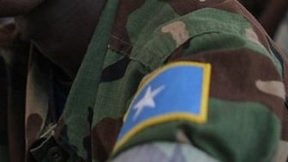
The planned takeover of four strategically important bases by African Union forces following Uganda’s withdrawal exposes the continuing vulnerability of Somalia’s Federal Government.
Mogadishu (WDN) — The planned withdrawal of Ugandan troops from Somalia has once again exposed the fragility of the Federal Government and its continued dependence on international forces to maintain security, even in areas within striking distance of the capital.
According to an Associated Press report, the African Union Support and Stabilization Mission in Somalia (AUSSOM) plans to take over four military positions — Sabid-Anole, Bariire, Awdheegle and Bulonagad — as Ugandan forces withdraw. The arrangement is intended to prevent a security vacuum in strategically important parts of Lower Shabelle, rather than transfer immediate responsibility to the Somali National Army.
The development raises a fundamental question: after nearly 20 years of international military intervention, training, funding and logistical support, why is Somalia still unable to assume full responsibility for securing key military positions close to its capital?
The African Union first deployed troops to Somalia in 2007, when the mission was established to support the country’s stabilisation. United Nations logistical support followed in 2009 through the UN Support Office for AMISOM. Since then, the mission has evolved through several successive arrangements, from AMISOM to ATMIS and now AUSSOM. Further details are available from the United Nations and the African Union.
Throughout this period, Somalia has received extensive international assistance, including military training, equipment, operational support and logistical backing. These efforts have helped successive administrations maintain control of key population centres and resist Al-Shabaab’s insurgency. Yet the country remains far from developing fully self-sustaining security institutions capable of independently protecting its territory.
The continued need for foreign troops to occupy bases vacated by another foreign contingent is particularly revealing. Rather than demonstrating that the national army is ready to assume responsibility, the latest arrangement highlights how dependent Somalia’s security architecture remains on external forces.
A costly international commitment with limited institutional transformation
The problem is not that international forces have achieved nothing. Their sacrifices and operational contributions have helped prevent Al-Shabaab from overrunning major population centres, supported military operations and contributed to the survival of Somalia’s federal institutions. But battlefield gains and the survival of a government are not the same as building a capable state.
After so many years of international support, Somalia should have developed a more cohesive, disciplined and professionally managed national army, supported by reliable logistics, intelligence, command structures and sustainable domestic financing.
Instead, security responsibilities remain divided among international forces, bilateral military deployments and Somali units whose capabilities are uneven. The United Nations Support Office in Somalia provides logistical assistance to AUSSOM and support for Somali security forces participating in joint or coordinated operations with the African Union mission. This assistance includes essential supplies, transport, medical evacuation, communications and other operational support.
The scale and duration of this support demonstrate the extent to which Somalia’s security institutions remain tied to international assistance. Such support is not inherently a failure; international partnerships are an important part of security cooperation. The concern is that, after almost two decades, the country still cannot reliably replace departing foreign forces in strategically important locations.
A Congressional Research Service assessment has identified persistent problems involving funding, political cohesion and the capacity of Somali forces as major obstacles to the security transition. These challenges have delayed the transfer of full security responsibility.
Political fragility undermines security
Somalia’s security weaknesses cannot be separated from its political crisis. Persistent disputes between the Federal Government and Federal Member States, disagreements over constitutional changes and electoral arrangements, and a lack of sustained political consensus have weakened the coordination required to build a unified national security system.
A national army cannot become a dependable institution when its development is undermined by political rivalries, fragmented command arrangements, lack of national security strategy, inconsistent funding and competing loyalties. Security reform requires more than recruiting soldiers or handing over military bases. It requires a functioning state capable of building national force, funding, equipping them adequately, maintaining discipline and providing clear, legitimate command.
Al-Shabaab continues to exploit weaknesses in governance and security coordination. The Associated Press report highlights concerns that the withdrawal of Ugandan troops could leave strategically important areas of Lower Shabelle vulnerable to renewed militant attacks.
Any poorly managed withdrawal or transfer of military positions risks creating opportunities for the group to regain ground, threaten supply routes or intensify attacks against government-controlled areas.
Who is ultimately responsible for Somalia’s security?
The Federal Government must answer a difficult question: what has nearly two decades of international security assistance actually delivered in terms of lasting national capacity?
It cannot indefinitely present the presence of foreign troops as evidence of security progress while remaining unable to guarantee that its own forces can independently defend strategically important locations. Nor can international partners be expected to carry the burden of Somalia’s security without a credible, measurable and adequately funded plan for transferring responsibility to national institutions.
The African Union’s stated objective for AUSSOM is to support Somali security forces in gradually assuming full responsibility for national security. Achieving that objective will require more than troop rotations and the transfer of military bases. It demands sustained investment in professional training, command and control, intelligence, equipment, logistics and reliable financing. Further information is available through the African Union’s official website.
The planned takeover of the four bases by AUSSOM may be a necessary temporary measure to prevent a security vacuum. But it should not be mistaken for progress in building Somali security capacity. It is, rather, another reminder that the transition remains incomplete.
Ultimately, Somalia’s greatest security vulnerability is not simply the continued presence of Al-Shabaab. It is the failure to build a state capable of confronting that threat without prolonged dependence on foreign military forces. Nearly two decades of international support should have produced a substantially national security architecture and army. The fact that foreign troops are still needed to replace other foreign troops near the capital is a sobering measure of how far Somalia remains from that objective.
WardheerNews
Leave a Reply