
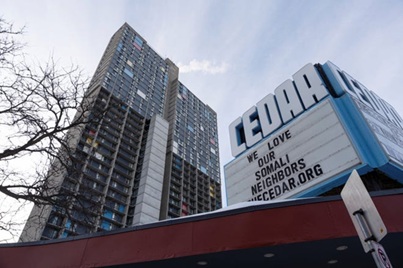
ST. CLOUD, MN ‒ The day after President Donald Trump called Somali immigrants in Minnesota “garbage,” more than 100 residents and elected officials gathered at a library to reassure their Somali neighbors they were still welcomed in St. Cloud, a regional hub roughly an hour drive north of Minneapolis.
Farhiya Iman was among them. Iman, 36, was born in Somalia and now calls St. Cloud home. The social worker and married mother of two told the St. Cloud Times, part of the USA TODAY Network, that the city made her who she is today.
Even amid tensions, she knows there are people there who will support her.
Still, Iman said, anti-Somali hate has found a home in central Minnesota, lurking in the comment sections of news articles and on social media. Racial and religious tensions have sometimes boiled over into violent threats, vandalism and efforts to stop refugee resettlement.
“[It’s] really comforting to know that we have allies that are checking on us,” Iman said. “But there’s also quite a few that have the same thinking as the president.”
Fear and anxiety among the nation’s largest Somali population in Minnesota reached new heights after Trump’s comments, in which he pointed to a massive fraud investigation. Some advocates say that investigation is being used as an excuse to target the entire community.
The controversy comes amid big changes in immigration enforcement. Trump has threatened to end the Temporary Protected Status (TPS) program for Somali refugees in Minnesota, and the U.S. Citizenship and Immigration Services has halted all immigration applications from Somalia and 18 other countries in the wake of an attack on two National Guard members in Washington, DC. The shooting suspect is an Afghan national.
Though the attacks and rhetoric aren’t new, Somali Minnesotans say the pressure mounting on the community is worse than ever.
“It’s a different temperature now,” said Ahmed Samatar, a professor at Macalester College in St. Paul, who is a Somali expert. “It’s quite ferocious. And really quite intimidating for people.”
Pressure mounts on deeply rooted Somali community in Minnesota
Minnesota is the state with the largest population of people with Somali ancestry, according to the Census Bureau. The population is estimated to be between 60,000 and 80,000.
It’s a hub that has grown since many arrived amid the country’s civil war and famine dating to the early 1990s. The state was an attractive location in part because of its success resettling Hmong refugees in the 1970s and 1980s, the Star Tribune reported.
Fraud cases sow more distrust
Trump and other elected officials, like U.S. House Majority Whip Tom Emmer, R-Minnesota, have sought to associate the Somali community with fraud, pointing to a series of criminal cases.
Since 2022, federal prosecutors have charged 78 people for their suspected roles in a $250 million fraud scheme involving federal nutrition aid.
The scheme was tied to the U.S. Department of Agriculture’s Federal Child Nutrition Program, which provides meals to children in need. The program, which expanded during the COVID-19 pandemic, allowed wider food distribution sites if sponsored by a nonprofit.
Prosecutors say the Minnesota nonprofit Feeding Our Future and its partners operated sham sponsor distribution sites, claiming to have helped distribute millions of meals while spending money on items including luxury cars, houses, jewelry and resort property abroad.
The case drew further attention in 2024 when five people were charged with conspiring to bribe a juror with a bag of $120,000. Several dozen have pleaded guilty or been convicted, according to news reports.
In another case, eight defendants were charged in September in what prosecutors said was a fraud scheme involving Housing Stabilization Services, a program designed to help people with disabilities, mental illnesses or substance use disorders.
Read more: A ‘volcano’ of controversy has hit the Minnesota Somali community
Source: USA