

By Abdikarim Haji Abdi Buh
For more than seventy years, Palestine has burned in the conscience of the Muslim world. Generations have grown up under occupation, displacement, blockade, and war. Children in Gaza learn the sound of drones before they learn arithmetic.
Families in the West Bank measure their lives in checkpoints and permits. The suffering has endured decade after decade, while Palestine sits surrounded by Arab capitals, Muslim armies, oil wealth, and global influence.
And yet it stands alone. Not because the region lacks power. But because it lacks unity.
A Billion Voices, No Single Weight
The Muslim world spans continents. It commands some of the world’s most critical energy routes and natural resources. Its population exceeds a billion people. Its markets, if integrated, would rival the largest economic blocs on earth. On paper, it should be formidable. In practice, it is fractured.
Sunni versus Shia. Rival alliances. Proxy wars. Competing visions of leadership. Theological differences transformed into political battle lines. Instead of forming a unified diplomatic and economic bloc capable of shaping global outcomes, the region remains divided into camps — each suspicious of the other, each calculating advantage, each fearing internal rivals as much as external pressure. And where there is division, there is vulnerability.
The Cost of Sectarian Rivalry
The Sunni–Shia divide began as a dispute over succession in the 7th century. For centuries, it remained a theological and historical difference — sometimes tense, often manageable. What transformed it into a geopolitical fault line was power.
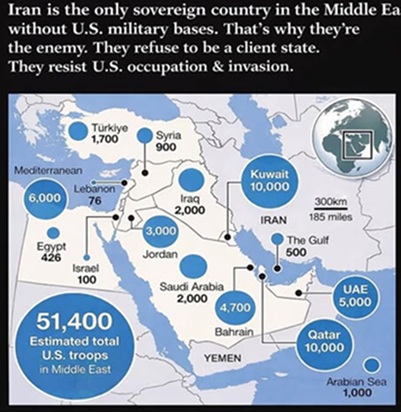
Since the late 20th century, regional competition hardened sectarian identities into strategic tools. Iraq became a battlefield of memory and revenge. Syria’s uprising descended into sectarian entrenchment. Yemen collapsed into proxy confrontation. Lebanon remains balanced on a razor’s edge.
Energy that could have built universities-built militias. Wealth that could have rebuilt cities financed rivalry. Diplomatic capital that could have strengthened collective bargaining was spent countering one another. The result is not strength. It is paralysis.
Palestine and the Question That Lingers
For seven decades, Palestinians have endured displacement and recurring cycles of violence. They are surrounded by Muslim-majority states, yet politically isolated. Their cause is invoked in speeches, but often diluted in strategy. The question that haunts the region is not whether solidarity exists in rhetoric. It is whether cohesion exists in policy.
Imagine a Middle East where Sunni-majority states and Shia-led Iran were not locked in rivalry, but coordinated economically and diplomatically. Imagine collective leverage over trade, energy, reconstruction, and security policy. Imagine a regional framework that reduced dependency on external military guarantees and amplified unified negotiation.
The strategic landscape would look different. External actors calculate differently when facing division than when facing coordination. Fragmented regions invite pressure. Consolidated regions command respect.
Power Is Organization
Unity does not require theological uniformity. Europe contains Catholics, Protestants, and secular societies, yet negotiates as a bloc. Southeast Asia encompasses monarchies, republics, and military governments — yet coordinates regionally.
The Muslim world’s challenge is not faith. It is fragmentation. As long as sectarian rivalry defines alliances, the region remains reactive rather than proactive — responding to crises rather than shaping outcomes.
A Choice, Not a Destiny
Division is not destiny. It is a political choice reinforced over time. The same energy spent on outmaneuvering one another could be redirected toward economic integration, regional development, and coordinated diplomacy.
The suffering of Palestine — and of countless others across the region — has persisted not only because of external conflict, but because internal fracture prevents sustained collective strategy.
A billion people speaking with one voice would not need to threaten anyone to be heard. But a billion divided voices are easily ignored.
The future of the Muslim world will not be decided by ancient grievances alone. It will be decided by whether modern leaders continue to weaponize sectarian identity — or choose to transcend it. Because history is unforgiving to civilizations that fracture themselves.
And unity, when it comes, is not about domination. It is about dignity.
Abdikarim Haji Abdi Buh
Email: abdikarimbuh@yahoo.com