

By Abdikarim Haji Abdi Buh
When the former leader of Cambodia’s Khmer Rouge died on April 15, 1998, he was living under house arrest in Anlong Veng, a jungle settlement near the Thai border that served as the movement’s last, diminished sanctuary. He was 73, physically frail, and politically irrelevant. The man who had once presided over one of the twentieth century’s most lethal experiments in social engineering passed away without trial, without apology, and largely without witnesses.
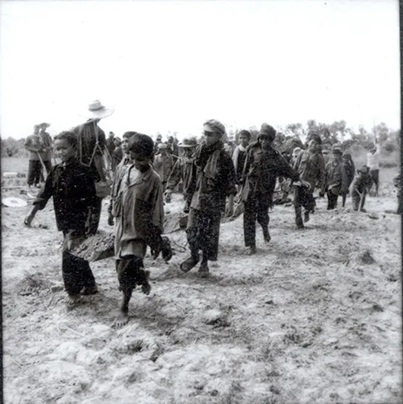
The setting was fitting in its banality. Pol Pot’s final residence—a wooden house with a tin roof and sparse furnishings—stood in stark contrast to the grandiosity of the revolution he had imposed on Cambodia between 1975 and 1979. In those years, nearly two million people died from execution, starvation, disease, and forced labour. Cities were emptied. Families were broken. Memory itself became suspect.
Two decades later, the architect of that system lived quietly, cared for by his wife, listening to shortwave radio broadcasts about a world that had long since written him off. The Khmer Rouge, once feared and courted by regional powers, had become a relic. Its fighters were defecting; its leaders were turning on one another.
Pol Pot’s downfall was not precipitated by international justice, but by internal decay. In July 1997, he ordered the execution of Son Sen, a senior figure and long-time ally, along with Son Sen’s family. The killings alarmed even the movement’s remaining hardliners. Ta Mok, the brutal commander who now controlled most Khmer Rouge forces, responded by arresting Pol Pot and placing him on trial.
The proceedings were a parody of accountability. Held in the jungle before a hand-picked audience, the trial convicted Pol Pot not for genocide or crimes against humanity, but for betraying the movement. The sentence—life under house arrest—was lenient by design. When asked about the millions who had died under his rule, Pol Pot expressed no remorse. He insisted his conscience was clear.
By early 1998, however, the calculus began to change. Negotiations were underway to transfer Pol Pot to an international tribunal. For a movement already disintegrating, surrendering its former leader offered the possibility of leverage, or absolution. For Pol Pot himself, the prospect of a public reckoning was intolerable.
He did not live to face it.
On the evening of April 15, his health deteriorated rapidly. There were no doctors nearby; seeking treatment would have meant capture. By nightfall, he was dead. The official cause was heart failure, possibly exacerbated by malaria. Rumours of suicide circulated, but were never substantiated.
His cremation was swift and unceremonious. On April 17—the anniversary of the Khmer Rouge’s seizure of Phnom Penh in 1975—his body was burned on a makeshift pyre of wood and old tyres. There was no grave, no marker, no formal acknowledgment of the lives extinguished under his command.
The reaction outside Cambodia was muted. There was relief that Pol Pot could no longer shape events, frustration that justice had been denied, and unease at the precedent. His death deprived survivors of testimony, accountability, and closure. It also underscored the limits of international justice when political will arrives too late.
Pol Pot’s life illustrates a recurring pattern of the twentieth century: revolutionary violence justified as moral necessity, insulated by ideology, and ultimately undone not by courts but by exhaustion and betrayal. The Khmer Rouge promised equality and renewal; it delivered trauma and demographic collapse. Its leader escaped judgment not through cunning, but through the indifference of time.
Cambodia continues to live with the consequences. The absence of Pol Pot from the dock did not erase the crimes committed in his name. It merely ensured that the burden of memory—and of meaning—would fall elsewhere.
History, in this case, did not close the account. It left it unsettled.
The Last Hours of Pol Pot: How the Architect of the Killing Fields Died in Obscurity
Anlong Veng, Cambodia — April 1998
In 1998, a frail 73-year-old man lay dying in a wooden house deep in the Cambodian jungle. This was Brother Number One—the architect of the killing fields, Pol Pot. The man responsible for the deaths of nearly two million people was drawing his final breaths in a remote village called Anlong Veng, near the Thai border.
What happened in those final hours was stranger, quieter, and more unsettling than anyone might have imagined.
Anlong Veng sat roughly ten miles from Thailand, buried in dense jungle terrain that had served as a Khmer Rouge stronghold for nearly two decades. Its location was strategic: close enough to the border to allow escape if necessary, yet remote enough to deter government forces. Thick vegetation encircled the settlement. The roads leading in and out were little more than dirt tracks—impassable during heavy rains and treacherous even in dry weather.
By April 1998, this outpost represented the last fragment of Pol Pot’s collapsing empire. The once-feared revolutionary movement that had ruled an entire country had dwindled to a few hundred aging fighters scattered through the forests. Many had defected under government amnesty programs. Others had quietly slipped back into civilian life. What remained was a skeleton force—men with nowhere else to go, clinging to a revolution that had long devoured itself.
Pol Pot’s house stood on wooden stilts, a traditional Cambodian design meant to protect against flooding and wildlife. It measured roughly 30 by 20 feet, with woven bamboo walls that allowed air to circulate but offered little privacy. A corrugated metal roof turned tropical rainstorms into deafening assaults and trapped heat beneath it during the day.
Inside, the furnishings were sparse: a narrow bed with a thin mattress, a small scarred wooden table, a few mismatched chairs, a kerosene lamp, and a shortwave radio that sometimes caught the BBC World Service or Voice of America. A mosquito net hung over the bed—essential protection in a region where malaria was endemic. His personal belongings amounted to a few changes of clothes, some papers, and a handful of books.
The irony was impossible to miss. The man who had emptied Cambodia’s cities and forced millions into rural labor camps now lived in conditions resembling those he had imposed on his victims. But unlike them, Pol Pot had chosen this life. He was not starved. He was not beaten. He faced no execution for minor infractions.
His health, however, had deteriorated rapidly. Once a tireless guerrilla who trekked through jungle mountains, he now moved with painful slowness. His legs were swollen and weak. Malaria—an illness he had survived many times before—had returned with renewed ferocity. Heart disease made every breath an effort. Those who saw him during this period described a man who looked far older than his years, gaunt and distant, his authority long evaporated.
Yet some habits remained. He listened obsessively to international radio broadcasts. He received occasional visits from loyalists. He ate at regular hours, though little. His wife, Mea Son, his fourth marriage, attended to his needs quietly and without comment.
Nearby stood the better-built house of Ta Mok—the one-legged general known as “The Butcher”—who now controlled what remained of the Khmer Rouge. His compound had glass windows and a generator that ran a few hours each evening. Guards slept in hammocks strung between posts. A crude medical hut held antibiotics and antimalarial drugs when available, but nothing approaching real care.
The settlement felt frozen in time. Faded propaganda slogans peeled from wooden boards. A yellowing portrait of a younger Pol Pot hung in a headquarters building. Old military trucks rusted in place. Guards still patrolled, but out of habit rather than necessity. No one was coming. The Cambodian government was content to let the Khmer Rouge die quietly. Thailand watched from across the border. The world had largely moved on.
The Fall Before the End
Pol Pot’s final isolation followed a dramatic internal collapse. In July 1997, fearing betrayal, he ordered the execution of Son Sen—his former defense minister and one of the regime’s founders—along with Son Sen’s entire family. Fourteen people were killed; their bodies crushed under truck wheels to prevent burial rites.
It was a fatal miscalculation.
Ta Mok moved against him. Pol Pot was arrested by his own movement and subjected to a surreal show trial in the jungle—documented by journalist Nate Thayer. Hundreds gathered in a clearing. Pol Pot sat bewildered, diminished, accused not of genocide but of betraying Khmer Rouge unity. The verdict was life imprisonment under house arrest.
Asked about the millions who died under his rule, Pol Pot insisted he had a clear conscience. He claimed everything he did was for Cambodia’s good.
From that moment, his authority vanished. International pressure mounted for his arrest and transfer to an international tribunal. For Pol Pot, the prospect of public judgment was unthinkable.
April 15, 1998
The jungle woke as it always did—cicadas buzzing, parrots calling, mist lifting with the heat. Mea Son prepared a simple breakfast: rice porridge and weak tea. Pol Pot struggled to eat. His breathing was labored, audible outside the room.
By midday, his condition worsened. He became disoriented. His breaths grew shallow and rapid. There were no doctors. Seeking outside care meant certain arrest.
Ta Mok faced a calculation. Pol Pot alive was a liability. Pol Pot dead would end international pressure—but invite suspicion.
As afternoon turned to evening, a small group gathered nearby. No one spoke much. Everyone understood they were witnessing the end of an era. There was no drama, no confession—only the slow extinguishing of a man who had reshaped a nation through terror.
By nightfall, Pol Pot’s breathing became erratic. Each gasp seemed like it might be his last. At approximately 10:15 p.m. on April 15, 1998, he died. Heart failure, likely compounded by malaria and age.
There was no outcry. Guards confirmed the absence of a pulse. Mea Son closed his eyes. Brother Number One was dead.
Aftermath Without Justice
For hours, the death was kept quiet. But secrecy was impossible. By morning, journalists were negotiating access. Ta Mok allowed photographs to prevent conspiracy theories. The man who had avoided cameras in life became an object of documentation in death.
The following day—April 17, the anniversary of the Khmer Rouge’s seizure of Phnom Penh in 1975—Pol Pot was cremated on a pyre of old tires and wood. No ceremony. No eulogy. Smoke rose into the jungle and dispersed.
International reaction was mixed: relief that he was gone, frustration that justice had been denied. No trial. No reckoning. Survivors felt cheated. Others felt numb.
Pol Pot died as millions he condemned never could: in a bed, with care, with a loved one nearby. His revolution promised purity and equality. It delivered starvation, mass graves, and national trauma. In the end, it consumed him too—leaving no monument, no grave, only memory. The ashes scattered in the wind.
And Cambodia was left, once again, to carry the weight of unanswered questions.
Abdikarim Haji Abdi Buh
Email: abdikarimbuh@yahoo.com